


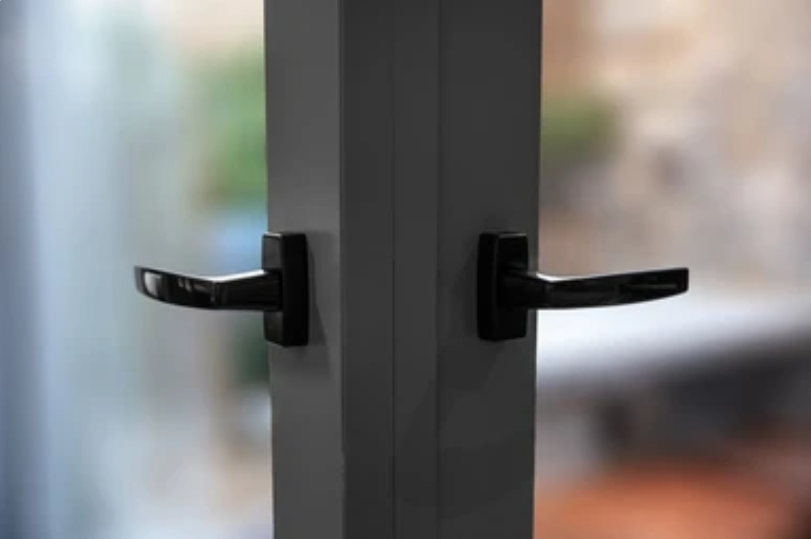
I. Introduction: The Overlooked Key – The Importance of Aluminum Window and Door Handles
Aluminum windows and doors play a crucial role in modern architecture, and their aesthetic appeal, durability, and energy efficiency are highly valued. However, when purchasing aluminum windows and doors, most people tend to focus on “major components” such as profile thickness, glass configuration, and sealing performance, while a seemingly minor component—the handle—is often overlooked. In reality, the handle is the most frequently interacted-with part of the aluminum window and door system, directly affecting user experience, safety, aesthetics, and even the overall lifespan of the windows and doors.
A high-quality aluminum window or door paired with a low-quality handle is like a luxury car fitted with a cheap steering wheel—the inconvenience in daily use, frequent damage, and safety hazards will gradually erode the initial satisfaction. This article will delve into various aspects of aluminum window and door handles, from materials, design, and function to selection and maintenance, helping you fully understand the “great wisdom” in this “small component,” addressing your pain points in the selection and use process, and ensuring that every window and door is perfect.
II. Core Functions and Design Pain Points of Aluminum Window and Door Handles
- (I) More Than Just Opening and Closing: The Multiple Roles of Handles
- Operation Hub: The most basic function, enabling the opening, closing, and locking of windows and doors.
- Safety Key: Connecting the lock points and lock seats is the first line of defense against theft and forced entry.
- User-Friendly Interface: The feel, force required, and operating logic directly affect user comfort.
- Aesthetic Highlight: Determines the visual style and quality of the windows and doors.
- Durability Benchmark: Its lifespan often indicates the lifespan of the entire hardware system.
- (II) Analysis of Common Pain Points: Have you encountered these problems?
- Stiff and difficult to operate: Windows and doors creak when opened or closed, or require significant force, making it difficult for the elderly and children to operate.
- Loose and detached, safety hazard: After a period of use, the handle becomes loose, or even the screws fall off, which not only affects use but may also cause the lock to fail, posing a safety risk.
- Surface damage, loss of aesthetics: Coating blistering, peeling, fading, or oxidation and corrosion of the base material severely affects the appearance of windows and doors and the overall quality of the home.
- Insecure locking, air and water leakage: The handle rotation cannot accurately drive all the lock points, resulting in gaps between the window sash and the frame, affecting sealing, sound insulation, and thermal insulation performance.
- Poorly designed: Complex operating logic (such as lifting, pressing down, and rotating combinations), making it difficult to open quickly in emergencies (such as fires), or prone to accidental operation, leading to locking.
- Inconsistent style, disrupting the overall aesthetic: The handle’s shape and color are incompatible with the style of the windows and doors and home decoration.
The root cause of these pain points often lies in inferior handle materials, unreasonable structural design, rough manufacturing processes, or improper installation. Next, we will delve into the internal structure of the handle to analyze the qualities that a high-quality handle should possess.
III. In-Depth Analysis: The Constituent Elements of High-Quality Aluminum Window and Door Handles
- (I) Material Determines the Foundation: The Secret to Strength and Durability
- Zinc Alloy:
- Advantages: The most commonly used material, excellent casting performance, allows for complex shapes, strong adhesion of surface electroplating treatment, wear-resistant and corrosion-resistant, and moderate cost.
- Grade: High-quality handles usually use high-grade zinc alloy (such as Zamak 5), whose strength, hardness, and creep resistance are far superior to cheap recycled materials.
- Identification: Low-quality zinc alloy feels light and flimsy, has internal pores, and is prone to breakage and deformation.
- Stainless Steel:
- Advantages: Extremely high strength, top-tier corrosion resistance (especially 304/316 medical grade), extremely long service life, commonly used in modern minimalist styles.
- Points to note: Higher cost, relatively simple design. Pay attention to whether the surface is brushed, polished, or sandblasted.
- Aluminum Alloy:
- Advantages: Same material as the window frame, consistent texture, can achieve a variety of colors through anodizing (such as champagne gold, black, bronze), and good weather resistance.
- Points to note: Strength is slightly lower than zinc alloy, requiring a high level of internal structural design.
- Internal Core Components:
- Square core/fork: The core component that transmits torque must be made of high-carbon steel or stainless steel and heat-treated to increase hardness; otherwise, it will wear easily and cause transmission failure.
- Spring: Ensures smooth handle return, must be made of stainless steel to prevent rust.
- Zinc Alloy:
- (II) Craftsmanship and Texture: The Science of Surface Treatment
- Surface treatment directly affects aesthetics, feel, corrosion resistance, and wear resistance.
- Powder Coating: Offers a wide range of colors and is relatively inexpensive, but its wear and scratch resistance are only average.
- Anodizing (primarily used for aluminum): Forms a hard oxide film, resulting in a transparent color with a metallic feel. It is corrosion-resistant, wear-resistant, and non-conductive.
- Electroplating (primarily used for zinc alloys): Such as chrome plating, nickel plating, bronze plating, and gold plating. High-end products use multi-layer electroplating (e.g., copper base – nickel layer – chrome surface), providing excellent corrosion resistance, high gloss, and a substantial feel.
- Fluorocarbon Paint Coating: Offers superior weather resistance, UV resistance, and long-lasting color. It is commonly used in high-end projects and coastal areas.
- Identification Tips: High-quality coatings/platings are uniform, dense, and have a smooth, lustrous finish, free of particles, bubbles, or streaks. A light scratch with a fingernail or a hard object (non-destructive) should leave no mark.
- Surface treatment directly affects aesthetics, feel, corrosion resistance, and wear resistance.
- (III) Structural Design: Smooth and Reliable Engineering
- Transmission Structure: Internal gears or cams should be precisely designed to ensure that the rotation angle matches the lock point’s movement, achieving easy and smooth opening and closing.
- Ergonomic Design: The cross-sectional shape, size, and angle of the handle’s grip should conform to the hand’s curves, providing a full and comfortable grip.
- Anti-loosening Design: Uses anti-loosening screws, internal snap rings, or riveting processes to ensure long-term use without loosening.
- Quick-assembly Design: Facilitates installation and subsequent maintenance and replacement.
IV. Choosing Based on Needs: Handle Types and Applicable Scenarios
- (I) Classified by Opening Method
- Single-point handle: Basic type, usually controls only one main locking point, used for interior doors or simple windows with low sealing requirements.
- Multi-point locking handle: Standard for modern casement windows/doors. By rotating the handle, it drives the transmission rod, simultaneously opening and closing multiple locking points (lock seats) around the window sash, achieving true tight locking and ensuring anti-theft, sound insulation, and thermal insulation performance. Available in separate (handle and base are separate) and integrated (one-piece molding, more stable) types.
- Linkage handle: Used to enhance sliding doors, curtain walls, and other systems. One action can sequentially unlock multiple locking points, making the operation convenient and safe.
- Folding sliding door handle: Usually a recessed or pull-down type, flush with the door panel, without affecting passage or aesthetics.
- (II) Classified by Style
- Modern minimalist style: Smooth lines, geometric shapes, mostly using original metal colors (silver-white, gray-black), matte or brushed textures.
- European classical style: Often features curves, patterns, and relief decorations, commonly using antique bronze, bronze, and gold plating.
- Chinese style: May incorporate Chinese symbols such as window lattices and patterns, often using dark metal or wood combinations.
- Invisible/embedded type: Minimizes its presence, highly integrated with the profile, pursuing a minimalist visual effect.
Selection suggestions: The style of the handle should be coordinated with the window and door series and the overall home decoration style. A modern minimalist decoration paired with a classical carved handle would look out of place.
V. Buying Guide: How to Choose a High-Quality Aluminum Door and Window Handle?
- (I) Clarify Your Needs
- Door and Window Type: Different types of handles are required for casement windows, tilt-and-turn windows, sliding doors, and folding doors.
- Usage Environment: Coastal/high-humidity areas require corrosion resistance; high-rise buildings require wind pressure resistance and safety; frequently used areas require durability.
- Users: Families with elderly people or children should choose handles that are easy to operate and have a simple design.
- Aesthetic Preferences: Determine the color and style that match the overall design.
- (II) On-Site Inspection: Observe, Feel, Ask, and Check
- Observe: Check if the surface is smooth and flawless, if the gaps between structural components are uniform, and if the brand logo is clear.
- Feel: Check the weight. High-quality handles of the same type feel heavier due to sufficient material usage.
- Test: Operate it yourself. A high-quality handle should have even damping, smooth and silent rotation, strong rebound, and no free play. The opening and closing processes should be smooth and without any jamming.
- Check: Check if the matching screws, square shafts, and other accessories are complete and of high quality. Inquire about the warranty period.
- (III) Brand and Certification
- Choose well-known hardware brands (such as HOPPE, SIEGENIA, GU from Germany, and well-known domestic brands such as Jianlang and Lixing) or high-end door and window system brands that cooperate with them. Pay attention to whether there are authoritative certifications (such as corrosion test ratings and service life test reports).
- (IV) Do Not Neglect Installation
- “Three parts product, seven parts installation.” Even the best handle will cause problems if it is not installed correctly or the screws are not tightened properly. Ensure that installation and adjustment are performed by professional personnel.
- VI. Use, Maintenance, and Troubleshooting
- (I) Correct Usage Habits
- Rotate the handle to the corresponding position; do not use excessive force to rotate or pull the handle.
- When opening or closing windows, hold the handle at the base or grip, avoiding pulling directly on the end of the handle.
- Ensure the doors and windows are completely closed before locking the handle.
- (II) Daily Cleaning and Maintenance
- Regularly wipe the surface dust with a soft cloth.
- For oil stains, wipe with a diluted neutral detergent and immediately dry with clean water.
- Do not use strong acids, strong alkalis, scouring powder, scouring pads, steel wool, etc., as these will damage the surface coating.
- Every six months, apply a small amount of lubricating oil or professional window and door lubricant to the rotating parts (such as the square core hole) to maintain smooth operation.
- (III) Common Fault DIY Troubleshooting
- Loose handle: Tighten the base screws with a suitable screwdriver (be careful not to strip the threads).
- Stiff rotation: Check for foreign objects and add lubricant.
- Incomplete locking: Check if the door or window frame is misaligned due to settling or deformation; contact the manufacturer for adjustment, and do not force the handle.
- Unable to reset: The internal spring may be faulty or the structure damaged; contact after-sales service for replacement.
- (I) Correct Usage Habits
VII. Future Trends: The Integration of Intelligence and Humanization
Aluminum door and window handles are evolving towards a more intelligent, integrated, and environmentally friendly direction:
- Smart Integration: Integrating fingerprint, password, Bluetooth, and NFC unlocking functions, and linking with smart home systems.
- Enhanced Security: Adding features such as anti-pry alarms, violent damage detection, and child safety locks.
- Application of New Materials: Such as antibacterial coatings, self-healing coatings, and more environmentally friendly composite materials.
- Concealed Design: Completely integrated with the profile, resulting in a cleaner appearance and reduced wind resistance and noise.
In the future, handles will evolve from a simple mechanical component into an intelligent terminal integrating safety, convenience, and interaction.
VIII. FAQ
Q1: Why is there such a large price difference for aluminum door and window handles? Prices range from tens to hundreds of yuan.
A1: The price difference mainly stems from materials, craftsmanship, brand, and design. Handles costing tens of yuan may use recycled materials, have a flimsy internal structure, and a simple surface treatment, making them prone to damage. Handles costing hundreds of yuan use high-quality alloys, precision structures, multi-layer electroplating, and rigorous testing, resulting in a significant improvement in durability and user experience. As it’s a frequently used component, investing in a high-quality handle is worthwhile.
Q2: I want to replace the handles on my old doors and windows at home. Can I buy and replace them myself?
A2: Yes, but you need to pay attention to compatibility. The key parameters are: ① Installation hole spacing (the distance between the centers of the two screw holes on the base); ② Square spindle size (the steel shaft that transmits torque, commonly 7mm, 10mm, etc.). It’s best to measure or take a picture before removing the old handle. It’s recommended to buy the same model from the original brand or consult the door and window manufacturer. The installation process is simple, but you need to align the holes and tighten the screws.
Q3: My windows are inward-opening and tilt-and-turn. Are there any special requirements for the handles?
A3: Yes. Inward-opening and tilt-and-turn windows must use special multi-point locking handles. These handles usually have multiple positions (horizontal – closed, vertical – tilt-and-turn, further rotation – inward opening), controlling different locking points through a complex transmission mechanism. You absolutely cannot replace them with ordinary casement window handles; otherwise, the tilt-and-turn function will not work, and the transmission mechanism may even be damaged.
Q4: My house is in a coastal area. How do I choose a more corrosion-resistant handle?
A4: Prioritize high-quality stainless steel (304/316) handles, which have the strongest resistance to salt spray corrosion. Alternatively, choose high-quality zinc alloy handles with multi-layer electroplating (especially copper-nickel-chromium structure), or aluminum alloy handles with fluorocarbon coating. Avoid products with thin surface treatment or unknown coating quality.
Q5: What should I do if the handle surface is scratched by a hard object?
A5: Superficial scratches can be gently polished with a fine polishing compound (such as car scratch remover). Deep scratches or damaged plating cannot be repaired and will affect the rust resistance. If aesthetics are a concern, consider replacing the handle part (which can usually be purchased separately).
Q6: Why does the handle sometimes feel heavy and difficult to turn?
A6: Possible reasons include: 1. Door or window deformation or sagging, leading to increased friction between the lock point and the lock base; 2. Lack of lubrication in the transmission mechanism, causing internal dryness; 3. Extremely low ambient temperature, causing the lubricating oil to solidify; 4. Worn or damaged gears inside the handle. First, check if the door or window is properly closed and try adding lubricant. If the problem persists, professional inspection is required.
Q7: Are child safety locks and regular handle locks the same thing?
A7: Not exactly. The locking function of a regular handle primarily prevents outsiders from opening it. A child safety lock is a separate device, usually installed on the window frame. When locked, the handle inside the room cannot be fully opened (usually allowing for tilt-and-turn ventilation but not full opening), effectively preventing children from accidentally pushing the window open. It is an important safety supplement.
IX. Conclusion
Aluminum door and window handles, these components that we interact with intimately every day, are far more than simple metal parts. They represent the intersection of function and aesthetics, the guardians of safety and comfort, and a subtle indicator of the overall quality of a door or window. Choosing a high-quality handle means choosing a smooth and effortless operating experience, a long-lasting and aesthetically pleasing appearance, reliable safety and security, and a worry-free life without frequent repairs or replacements.
When purchasing, be sure to move beyond the “supporting role” mindset and elevate the handle to the same level of importance as the profiles and glass. By paying attention to materials, craftsmanship, design, and brand, and considering your own usage scenarios and aesthetic preferences, you can make a wise choice. Remember that professional installation and proper maintenance are key to extending its lifespan.
A good door or window is crucial to the soul of a building; a good handle is crucial to every friendly interaction between that soul and its inhabitants. We hope that through this article, you can gain insight into the craftsmanship and wisdom embodied in these small details, and create a more perfect and secure living space for you and your family.