


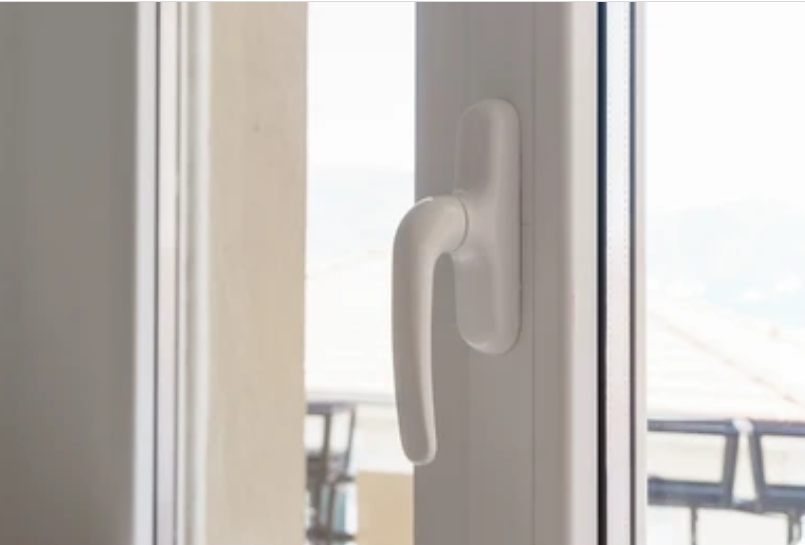
Introduction: Why are door and window opening methods so important?
In residential decoration and architectural design, the importance of choosing aluminum doors and windows is often underestimated. In fact, doors and windows are not only the exterior of a building, but also a bridge connecting the indoor and outdoor environments, directly affecting living comfort, energy efficiency, safety, and aesthetic value. Statistics show that the average household loses approximately 40%-50% of its total building energy consumption through doors and windows, and a suitable opening method can significantly improve this situation.
However, many consumers are confused when faced with numerous aluminum door and window opening methods: casement windows, sliding windows, tilt-and-turn windows, outward-opening top-hung windows… What are the characteristics of each method? Which spaces are they suitable for? How to balance the needs of ventilation, lighting, safety, and cleaning and maintenance? This article will provide an in-depth analysis of various aluminum door and window opening methods to help you make an informed choice and solve practical problems in your living environment.
I. Casement Windows: A Comprehensive Analysis of a Classic Choice
- 1.1 Inward-Opening Casement Windows: A Balance of Safety and Ease of Cleaning
- Inward-opening casement windows are one of the most common window types in Europe and northern China, with the sash opening inwards. The biggest advantage of this opening method is its ease of cleaning and maintenance—regardless of floor level, users can easily wipe the exterior glass.
- Solving Pain Points:
- High-Rise Cleaning Challenges: For residents of high-rise buildings, cleaning exterior windows poses a significant safety hazard. Inward-opening casement windows completely avoid this problem.
- Superior Sealing Performance: Multiple sealing designs ensure the highest level of airtightness and watertightness for inward-opening casement windows, making them particularly suitable for cold or windy regions.
- Precise Ventilation Control: By adjusting the opening angle, the airflow and direction can be precisely controlled.
- Suitable Scenarios: Bedrooms, studies, living rooms, and other main living spaces, especially in mid- to high-rise buildings.
- Precautions: Inward-opening casement windows will occupy some interior space, affecting curtain installation and furniture placement; therefore, planning is necessary during the design phase.
- 1.2 Outward-opening Casement Windows: A Practical Space-Saving Solution
- Outward-opening cases open in the opposite direction to inward-opening cases, with the window sash pushing outwards. This design maximises space savings, making it especially suitable for small apartments or situations where furniture needs to be placed near the window.
- Solutions:
- Space Optimisation: Eliminates interior space occupation, making it an ideal choice for small apartments.
- Waterproofing Advantages: Rainwater is less likely to enter the room due to wind direction, providing excellent waterproofing performance.
- Safety Considerations: Children are less likely to climb the open window sash, reducing the risk of falls.
- Applicable Scenarios: Apartments, small apartments, schools, hospitals, and other places with limited space.
- Precautions: Outward-opening windows are more difficult to clean and maintain. High-rise buildings require limiters to ensure safety. Some regions have regulations restricting outward-opening windows in high-rise buildings.
- 1.3 Technological Innovation and Upgrades of Casement Windows
- Modern casement windows are no longer limited to traditional designs. Technological innovations have solved many traditional pain points:
- Micro-ventilation system: Allows for slight ventilation even when fully closed, maintaining fresh air.
- Safety locks: Equipped with a multi-point locking system, significantly improving anti-theft performance.
- Anti-fall design: Outward-opening windows are equipped with safety hinges to prevent accidental window sash falls.
- Intelligent upgrades: Includes intelligent functions such as electric opening and automatic closing based on weather sensors.
- Modern casement windows are no longer limited to traditional designs. Technological innovations have solved many traditional pain points:
II. Sliding Windows and Doors: A Space-Saving Solution
- 2.1 Traditional Sliding Windows: An Economical and Practical Choice
- Sliding windows use a horizontal sliding opening mechanism and are one of the most common aluminum alloy window types. Their biggest advantage is that they take up no indoor or outdoor space and are flexible and convenient to open.
- Solve Pain Points:
- Zero Space Occupancy: Especially suitable for narrow spaces such as balconies and corridors.
- Easy Operation: Easy to open, even children and the elderly can operate it easily.
- Wide View: The Maximum opening area can reach 50%, providing good ventilation and lighting.
- Applicable Scenarios: Balcony doors, partitions, kitchens, bathrooms, and other areas with limited space.
- Limitations:
- Relatively Poor Sealing: The track design results in lower airtightness and watertightness compared to casement windows.
- Cleaning Dead Zones: Some glass areas are always difficult to clean.
- Limited Wind Pressure Resistance: Not suitable for high-rise buildings or areas with strong winds.
- 2.2 Lift-Up Sliding Doors: Seamless Connection Between Indoor and Outdoor Space
- Lift-up sliding doors are an upgraded version of sliding windows. Through a special track and lifting mechanism, the door sash lowers and seals when closed, and lifts and slides when opened.
- Technological Innovation Highlights:
- Superior Sealing: When closed, the door panel sinks to tighten the sealing strip, achieving a sealing effect close to that of a casement window.
- Large Span Design: Single panel width can reach over 2 meters, enabling ultra-large opening designs.
- Smooth Operation: Equipped with heavy-duty pulleys and a balancing system, even large door panels can be easily pushed and pulled.
- Solving Pain Points: Solves the core problems of poor sealing and inadequate sound and heat insulation in traditional sliding doors and windows, making it particularly suitable for large-area glass door and window designs in villas and luxury homes.
- 2.3 Modern Evolution of Sliding Doors and Windows
- Folding Sliding System: Multiple doors fold and slide to one side, achieving a completely open space.
- Hidden Track: The track is embedded in the ground, achieving barrier-free passage and aesthetic appeal.
- Intelligent Track: Intelligent functions such as electric drive and sensor opening.
III. Window Systems: A Perfect Balance of Ventilation and Safety
- 3.1 Inward-Opening and Tilting-Down Windows: A Mainstream High-Performance Choice in Europe
- Inward-opening and tilt-and-turn windows are a multi-functional window type with two opening modes: conventional inward opening and
- bottom-hung tilt-and-turn. This design has become standard in Germany and the Nordic countries.
- Advantages of Dual Opening Modes:
- Inward Tilt-Over Mode Features:
- All-Weather Ventilation: Maintains ventilation even in rainy weather, preventing rainwater from entering the room.
- Safety Protection: Limited opening gap prevents children from passing through, thus preventing falls.
- Airflow Guidance: Cool air enters from above and mixes naturally with warm indoor air, avoiding direct drafts and discomfort.
- Inward Hinged Mode Features:
- Maximum Ventilation: Fully opens when rapid ventilation is needed.
- Easy Cleaning: The window sash opens fully inward, making it easy to clean the outer glass.
- Solving Key Pain Points:
- The Conflict Between Safety and Ventilation: Ensures both ventilation and child safety.
- Weather Adaptability: Maintains suitable ventilation under various weather conditions.
- Energy Saving and Comfort Balance: Minimal ventilation in winter reduces heat loss.
- Inward Tilt-Over Mode Features:
- 3.2 Outward Opening Top-Hung Window: A Multifunctional Ventilation Solution
- The outward-opening top-hung window is the opposite of the inward-opening tilt-over window; the window sash tilts outward and upward. This window type combines the space-saving advantages of outward-opening windows with the safe ventilation advantages of awning windows.
- Unique Advantages:
- Zero Space Occupancy: Does not occupy indoor space when open.
- Rainproof and Ventilated: The tilted design effectively prevents rainwater intrusion.
- Safety Performance: Limited opening angle prevents children from climbing out.
- Applicable Scenarios: Public buildings, schools, hospitals, and high-rise residential buildings.
- 3.3 Technical Details of the Heated Window System
- Hardware System: High-performance hardware is key to achieving multi-functional opening.
- Sealing Design: Multiple seals ensure performance in different opening modes.
- Operating Experience: User-friendly handle design, simple and intuitive mode switching.
IV. Composite Opening Methods: Flexible Adaptation to Diverse Needs
- 4.1 Casement + Hooded Window Combination System
- Modern high-end aluminum doors and windows often integrate casement and hooded window functions into a single hardware system, allowing users to choose different opening methods according to their needs.
- Typical Combination Modes:
- Casement + Tilt-and-Turn
- Casement + Top-Hood
- Sliding + Casement (Side-Hood)
- Solving Pain Points: One window serves multiple purposes, adapting to diverse living scenarios, eliminating the need to install multiple window types for different needs.
- 4.2 Intelligent Composite Opening System
- Through motor drive and intelligent control, multiple opening methods can be automatically switched:
- Weather Sensing System: Automatically switches to safety mode based on wind and rain sensors
- Timed Ventilation Program: Presets the ventilation time and mode
- Remote Control: Controls door and window opening status via mobile APP
- Through motor drive and intelligent control, multiple opening methods can be automatically switched:
V. Special Opening Methods and Innovative Designs
- 5.1 Rotating Windows: All-Around Ventilation and Cleaning
- Rotating windows allow the sash to rotate around a central axis, enabling inward and outward rotation. This design is common in historical European buildings and has been modernized.
- Unique Advantages:
- Cleanliness Without Dead Angles: After the sash rotates, both the inner and outer glass can be cleaned from inside.
- High-Efficiency Ventilation: Adjustable to various angles for optimal ventilation.
- Creative Design Element: Becomes a visual focal point on the building facade.
- Applicable Scenarios: High-rise apartments, commercial buildings, and spaces requiring special ventilation.
- 5.2 Center-Hung Windows and Vertical Rotating Windows
- Center-Hung Windows: The sash rotates around a horizontal central axis, commonly found in large public buildings.
- Vertical Rotating Windows: The sash rotates around a vertical axis, suitable for special ventilation needs.
- 5.3 Frameless Balcony Systems
- Completely breaking the limitations of traditional window frames, the glass panels can slide and fold sequentially, allowing the balcony to be fully open.
- Solving Pain Points: Traditional enclosed balconies affect views and ventilation, while open balconies are limited by weather. Frameless systems perfectly balance the needs of openness and enclosure.
VI. Selection Guide: How to Choose the Best Opening Method for Different Spaces
- 6.1 Choose by Room Function
- Bedroom:
- Preferred Option: Inward-opening tilt-and-turn window
- Reason: Ensures safe ventilation, avoids direct drafts at night, and facilitates cleaning
- Alternative Option: Outward-opening top-hung window (if permitted locally)
- Living Room:
- Preferred Option: Large fixed window + side-opening or tilt-and-turn window
- Reason: Maximizes view, allows flexible control of ventilation.
- High-end Option: Lift-up sliding door or folding system connecting to the balcony
- Kitchen:
- Preferred Option: Casement window or top-hung window
- Reason: It effectively exhausts cooking fumes and prevents rainwater backflow
- Special Needs: A Window type with a micro-ventilation function can be considered.
- Bathroom:
- Preferred Option: Top-hung window or tilt-and-turn window
- Reason: Ensures privacy while maintaining continuous ventilation, preventing mold growth
- Alternative Option: Sliding window (if space is limited)
- Balcony:
- Enclosed Balcony: Lift-up sliding door or folding door
- Semi-open Balcony: Frameless balcony system
- Safety Considerations: Guardrails must be installed regardless of the window type chosen
- Bedroom:
- 6.2 Choosing by Building Type
- High-Rise Buildings:
- Prioritize inward-opening or tilt-and-turn windows.
- If outward-opening is required, it must comply with local regulations and be equipped with safety devices.
- Emphasis on wind pressure resistance and airtightness.
- Low-Rise/Villas:
- More freedom of choice; outward-opening windows can be considered.
- Large-sized lift-and-slide systems can be used boldly.
- Consider the harmony between doors/windows and architectural style.
- Street-Facing Buildings:
- Emphasis on sound insulation.
- Ventilated and soundproof windows (with special ventilation structures) can be selected.
- Consider burglarproof performance.
- High-Rise Buildings:
- 6.3 Choosing by Climate Region
- Cold Regions:
- Prioritize window types with the best airtightness.
- Inward-opening and tilt-and-turn windows are ideal.
- Emphasis on the thermal insulation performance of the glass.
- Hot and Rainy Regions:
- Consider rainproof and ventilation functions.
- Outward-opening top-hung windows are a good choice.
- Good sun shading is required.
- Windy and Sandy Regions:
- Emphasis on airtightness.
- Avoid excessively large opening sashes.
- Consider a dustproof design.
- Cold Regions:
VII. Installation and Maintenance Points
- 7.1 The Importance of Professional Installation
- 30% of door and window performance depends on the product itself, and 70% depends on installation quality. Improper installation can lead to:
- Sealing failure, increased energy consumption
- Smooth opening, premature hardware damage
- Leaks such as water and air leaks
- Professional Installation Points:
- Accurately measure opening dimensions
- Use correct installation materials and techniques
- Properly seal the windows
- Adjust to the optimal opening position
- 30% of door and window performance depends on the product itself, and 70% depends on installation quality. Improper installation can lead to:
- 7.2 Daily Maintenance Guide
- Regular Cleaning:
- Wipe the profiles and glass with a neutral detergent
- Clean the tracks and drain holes
- Avoid using corrosive chemicals
- Hardware Maintenance:
- Regularly check for loose screws
- Lubricate moving parts (using a special lubricant)
- Check the condition of the sealing strips and replace them promptly
- Seasonal Inspections:
- Spring: Check the sealing condition after winter
- Before the rainy season: Check the drainage system
- Before winter: Check the overall sealing performance
- Regular Cleaning:
VIII. Future Trends: Intelligentization and Sustainable Development
- 8.1 Intelligent Door and Window Systems
- Automatic Control: Automatically adjusts based on temperature, humidity, and air quality.
- Integrated Security: Linked with home security systems.
- Energy Management: Optimizes natural lighting and ventilation, reducing energy consumption.
- 8.2 New Materials and Processes
- Composite Profiles: Composites of aluminum alloys and other materials enhance performance.
- Intelligent Glass: Electrochromic and thermochromic glass.
- Environmentally Friendly Surface Treatments: More environmentally friendly spraying and oxidation processes.
- 8.3 Personalized Customization
- Color Customization: Perfectly matches building facades.
- Shape Customization: Special shapes, such as curved and polygonal shapes.
- Function Customization: Combines functions according to specific needs.
FAQ
Q1: Should I choose inward-opening or outward-opening windows for high-rise residential buildings?
A: From a safety and cleanliness perspective, inward-opening or tilt-and-turn windows are the preferred choice for high-rise residential buildings. If you choose outward-opening windows, you must ensure that:
They comply with local building codes (many areas restrict outward-opening windows in high-rise buildings).
They are equipped with fall arrestors and safety limiters.
They regularly check the condition of the hardware.
Q2: Which has better sound insulation, casement windows or sliding windows?
A: Casement windows generally have better sound insulation than sliding windows. Casement windows use a multi-seal design, with the window sash tightly pressed against the sealing strip, achieving sound insulation performance of 35-45 decibels. Sliding windows, due to track gaps, generally have sound insulation performance of 25-35 decibels. If you have special requirements for sound insulation, you can choose lift-up sliding doors or specially designed soundproof windows.
Q3: Will inward-opening and tilt-and-turn windows take up too much indoor space?
A: In tilt-and-turn mode, the window sash only tilts inward about 15 degrees, taking up almost no space. Space is only taken up when fully open inwards. Modern inward-opening and tilt-and-turn window designs have fully considered this issue. The window sash width is usually not too large, and it can be close to the wall when open, occupying limited space. Proper furniture layout can completely avoid this problem.
Q4: How to solve the problem of inward-opening windows affecting curtains and interior layout?
A: Several solutions:
Choose a window sash design with compartments, allowing only some sashes to open.
Use Roman blinds or roller blinds instead of traditional fabric curtains.
Install curtain rods with hinges that can be tilted upwards.
Plan in the design to avoid areas with curtains.
Consider using outward-opening top-hung windows as an alternative.
Q5: What to do about dust accumulation in sliding door and window tracks?
A: This is a common problem with sliding doors and windows. Solutions include:
Choose a track design with dustproof strips.
Clean the tracks regularly with a vacuum cleaner.
Choose a lift-up sliding system where the door sash retracts and seals when closed.
Consider a concealed track design.
Use track dust covers.
Q6: How to judge the sealing performance of doors and windows?
A: You can judge the airtightness level by checking the product’s testing report (the national standard has 8 levels, level 1 is the highest).
On-site testing: After closing the doors and windows, feel for airflow at the edges.
Observe the sealing strip: Is it intact, elastic, and tightly installed?
Observe in rainy weather: Is there any rainwater seepage?
Simple test: Place a strip of paper in the window seam; if it is difficult to pull out after closing, the seal is good.
Q7: How to choose the opening method when renovating old windows?
A: When renovating old windows, consider:
The original opening structure and load-bearing capacity.
Whether the replaced window will affect the uniformity of the exterior facade.
Whether the interior decoration allows for changes to the window type.
Budget constraints: Inward-opening and tilt-and-turn windows are usually more expensive than ordinary casement windows. It is recommended to consult a professional door and window company for an on-site assessment. Usually, the safest option is to keep the original opening method and upgrade the materials and hardware system.
Q8: Is a smart door and window system worth investing in?
A: It depends on specific needs: Situations where investment is worthwhile:
Families who frequently forget to close windows
Villas or large apartments where manual opening and closing are inconvenient
Those with high requirements for indoor environmental quality
Those requiring integration with a smart home system
Situations where investment can be postponed:
Limited budget
Satisfied with the existing manual operation
Those planning to renovate their home in the near future
Smart windows and doors are the future trend, but the current product maturity and cost-effectiveness need to be specifically evaluated.
Summary
The opening methods of aluminum doors and windows are far more than just “how to open a window”; they directly impact living comfort, safety, energy efficiency, and space utilization. Through this detailed analysis, we can see that:
No single opening method is suitable for all scenarios: Each opening method has its unique advantages and applicable conditions. When choosing, one should comprehensively consider room function, building characteristics, climate conditions, and resident needs.
A balance between performance and convenience: Casement windows offer optimal sealing performance but may take up space; sliding windows save space but have relatively poor sealing; awning systems balance ventilation and security. Modern composite opening methods are breaking down these limitations.
Details determine the experience: The quality of hardware, installation precision, and maintenance—these “invisible” details often have a greater impact on the long-term user experience than the window type itself.
The future trend is here: Intelligentization, personalization, high performance, and sustainable development are the clear directions for the development of aluminum doors and windows. When choosing, one should consider the product’s technological foresight.
The ultimate principle for choosing an aluminum door and window opening method is: within your budget, choose the solution that best suits your specific needs and ensure professional installation and regular maintenance. Only in this way can doors and windows truly fulfill their function and become key elements in improving the quality of life, rather than merely openings in the architecture.
Whether you are building a new house, renovating an old one, or replacing doors and windows, we hope this comprehensive 9,000-word guide will provide you with valuable insights, helping you make informed decisions and create a more comfortable, safe, and energy-efficient living environment.