


Introduction
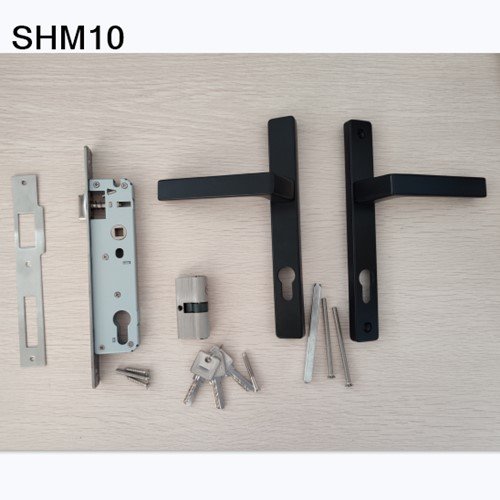
In modern architectural design, aluminum alloy doors are widely used in homes, offices, and commercial spaces due to their lightweight, durability, and aesthetic appeal. However, the special material and structure of aluminum doors place unique demands on locks. Aluminum door locks are not only the core of door security but also a key factor affecting the overall user experience. This article will delve into the selection, installation, maintenance, and intelligent development of aluminum door locks, helping you to fully understand this crucial home accessory.
Core features and advantages of aluminum door locks
- A perfect combination of lightweight and corrosion resistance
- The most significant characteristic of aluminum alloy doors is their lightweight nature, which requires locks to be both sturdy enough and not so heavy as to hinder the opening and closing of the door. High-quality aluminum door locks are typically made of materials such as stainless steel, zinc alloy, or reinforced nylon, which can resist oxidation and corrosion common to aluminum doors and maintain a long service life.
- Special design adapted to aluminum profiles
- Unlike traditional wooden doors, aluminum doors have diverse profile structures and limited space for lock installation. Therefore, aluminum door locks need to be specially designed to fit different types of aluminum profile grooves to ensure a secure installation without compromising the door’s sealing performance.
- A balance between aesthetics and function
- Modern aluminum door design emphasizes simplicity and aesthetics. As one of the visual focal points of the door, the lock’s design needs to coordinate with the overall style of the door. At the same time, functionality cannot be compromised, which requires aluminum door locks to achieve a perfect balance between aesthetics and practicality in design and manufacturing.
Aluminum door lock buying guide: Avoid common pitfalls
- Determine the lock type: Difference between hinged doors and sliding doors
- Aluminum doors are mainly divided into two types: hinged doors and sliding doors, and their lock types are completely different:
- Hinged Aluminum Door Locks:
- Typically, employ a multi-point locking system to enhance anti-theft performance.
- Includes various types such as lever handle locks and mortise locks.
- The door’s opening direction (left-opening/right-opening) needs to be considered.
- Sliding Aluminum Door Locks:
- Common lock types include hook locks, crescent locks, and locks specifically designed for sliding doors.
- The design focus is on not affecting the smoothness of sliding.
- Usually combined with a pulley system to achieve linkage between locking and sliding.
- Hinged Aluminum Door Locks:
- Aluminum doors are mainly divided into two types: hinged doors and sliding doors, and their lock types are completely different:
- Lock Cylinder Grade: The First Line of Defense for Security
- The lock cylinder is the core security component of a lock. National standards classify lock cylinders into three grades:
- Grade A Lock Cylinder: Resistance to technical opening ≥ 1 minute, resistance to destructive opening ≥ 15 minutes
- Grade B Lock Cylinder: Resistance to technical opening ≥ 5 minutes, resistance to destructive opening ≥ 30 minutes
- Grade C Lock Cylinder (Super B Grade): Resistance to technical opening ≥ 10 minutes, resistance to destructive opening ≥ 50 minutes
- For aluminum doors, especially entrance doors, it is recommended to choose at least a Grade B or C lock cylinder to ensure basic security requirements.
- The lock cylinder is the core security component of a lock. National standards classify lock cylinders into three grades:
- Surface Treatment Processes: More Than Just Aesthetics
- The surface treatment of aluminum door locks directly affects their weather resistance and lifespan:
- Electroplating: Common electroplating processes include nickel, chromium, and bronze, providing excellent corrosion resistance.
- Powder Coating: Powder coating offers a wide range of color choices, suitable for personalized customization.
- Anodizing: Particularly suitable for aluminum parts, forming a hard oxide layer that improves wear resistance.
- The surface treatment of aluminum door locks directly affects their weather resistance and lifespan:
- Brands and Certifications: Guaranteed Quality
- Choosing well-known brands and professionally certified products significantly reduces purchasing risk:
- Check for national mandatory certification (CCC)
- Check for compliance with industry standards (e.g., JG/T) (394-2012 《Building Door and Window Locks》)
- Understand the brand’s market reputation and after-sales service
- Choosing well-known brands and professionally certified products significantly reduces purchasing risk:
Installation Key Points: Ensure optimal lock performance
- Pre-installation Assessment: Measurement and Planning
- Before installing aluminum door locks, detailed measurements must be taken:
- Profile Groove Dimensions: Accurately measure the dimensions of the lock body mounting groove in the aluminum profile.
- Door Leaf Thickness: Aluminum door thickness is typically 35-100mm; different thicknesses require different lock specifications.
- Existing Hole Positions: If replacing the lock, confirm compatibility with existing hole positions.
- Before installing aluminum door locks, detailed measurements must be taken:
- Detailed Professional Installation Steps
- Step one: Accurate Positioning
- Use professional templates or measuring tools to determine the lock body, handle, and lock cylinder hole positions.
- Pay special attention to the installation height of sliding door locks; it should conform to ergonomics.
- Step Two: Precise Hole Drilling
- Use a dedicated hole drill to avoid damaging the aluminum profile structure.
- The hole edges should be smooth and burr-free to prevent scratches and affect the seal.
- Step Three: Lock Body Installation
- Ensure the lock body is fully embedded in the profile groove without any wobbling.
- Tighten the fixing screws moderately to avoid overtightening and deforming the profile.
- Step Four: Testing and Adjustment
- Test the smoothness of opening and closing multiple times.
- Check the fit accuracy between the locking points and the lock seat.
- Verify the operating force of the key and handle.
- Step one: Accurate Positioning
- Common Installation Errors and Prevention Methods
- Hole Misalignment: Use a professional positioning tool to avoid visual positioning.
- Screw Overtightening: Use a screwdriver with appropriate torque and follow the manufacturer’s recommended tightening force.
- Ignoring the Sealing Strip: Ensure the lock installation does not affect the door’s sealing performance.
Smart Aluminum Door Locks: A Revolution in Security and Convenience
- Smart Lock Technology Analysis
- Modern smart aluminum door locks integrate multiple advanced technologies:
- Biometric Technology:
- Fingerprint Recognition: Optical and capacitive sensors, with continuously improving recognition speed and accuracy
- Face Recognition: 3D structured light technology, preventing photo spoofing
- Iris Recognition: High security level, but higher cost
- Wireless Connectivity Technology:
- Bluetooth: Low-power connection, automatically unlocks when a mobile phone is near
- Wi-Fi: Remote control and monitoring, real-time reception of door lock status
- Zigbee/Z-Wave: Smart home system integration, scene linkage
- Mechanical Structure Innovation:
- Fully Automatic Lock Body: Automatically retracts the bolt after successful recognition
- Dual Circuit Design: Electronic. In the event of a partial malfunction, the mechanical components may still function.
- Emergency Power Interface: Temporary power can be supplied via a power bank when the battery is depleted.
- Biometric Technology:
- Modern smart aluminum door locks integrate multiple advanced technologies:
- Smart Lock Purchasing Considerations
- Compatibility Check: Confirm the compatibility of the smart lock with the aluminum door profile, thickness, and existing keyhole.
- Power Supply System: Mainstream uses dry cell batteries; understand battery life and low battery warning mechanisms.
- Emergency Plan: Mechanical backup opening method in case of electronic function failure.
- Data Security: Understand data encryption methods and privacy protection measures.
- Special Considerations for Smart Lock Installation
- The installation of smart aluminum door locks is more complex than traditional locks. The following should be noted:
- Waterproofing and moisture-proofing of electronic components.
- Concealed cable routing.
- Adaptation to complex structures, such as top and bottom rails.
- Integration of additional functions, such as motion detection and doorbell.
- The installation of smart aluminum door locks is more complex than traditional locks. The following should be noted:
Aluminum Door Lock Maintenance and Troubleshooting
- Daily Maintenance Points
- Cleaning Methods:
- Gently wipe the surface with a soft cloth. Avoid using corrosive cleaning agents.
- Regularly lubricate the lock cylinder with a special lubricant (such as graphite powder). Avoid using oil-based lubricants.
- Keep the electronic lock’s recognition area clean to prevent dirt from affecting recognition accuracy.
- Seasonal Inspections:
- Damp Season: Check the lock for signs of oxidation, paying special attention to moisture prevention of the lock cylinder.
- Dry Season: Check the smoothness of the bolt movement and increase lubrication if necessary.
- During Extreme Temperature Changes: Check whether the thermal expansion and contraction of the lock and its frame affect its use.
- Cleaning Methods:
- Common Faults and Solutions
- Common Mechanical Lock Problems:
- Difficulty turning the key
- Cause: Lock cylinder contamination or internal pin tumbler jamming
- Solution: Use a dedicated lock cylinder lubricant; do not use cooking oil
- Handle drooping or loose
- Cause: Loose fixing screws or internal handle wear
- Solution: Tighten screws or replace internal handle components
- Lock tongue cannot fully extend or retract
- Cause: Failed internal lock body spring or jammed lock tongue
- Solution: Disassemble and inspect; replace damaged parts
- Difficulty turning the key
- Common Smart Lock Issues:
- Increased recognition failure rate
- Cause: Dirty sensor or algorithm requiring update
- Solution: Clean the recognition area; check for firmware updates
- Rapid battery drain
- Cause: Circuit fault or poor battery quality
- Solution: Check circuit connections; replace with high-quality alkaline batteries
- Unstable network connection
- Causes: Signal interference or the router is too far away
- Solution: Check the network environment, consider adding a signal repeater
- Increased recognition failure rate
- Common Mechanical Lock Problems:
- When is professional repair needed?
- Seek professional help in the following situations:
- The lock cylinder cannot turn at all
- Smart lock electronic components completely malfunction
- Lock damaged by external force
- Security vulnerability or system failure
- Seek professional help in the following situations:
Aluminum door lock security upgrade solution
- Enhanced physical protection
- Multi-point locking system:
- Adding locking points on all four sides of the door leaf to improve overall pry resistance
- Especially suitable for large sliding and hinged doors
- Anti-saw bolt:
- Using hardened steel or incorporating internal anti-saw pins
- Effectively resists cutting with portable power tools
- Anti-drill plate:
- Special steel plate covering the lock cylinder area
- Prevents damage to the lock cylinder by drilling
- Multi-point locking system:
- Electronic security integration
- Video surveillance linkage:
- The door lock is linked with the door camera, automatically recording when unlocking
- Real-time alarm push for suspicious operations
- Smart scene settings:
- Automatic door locking and activation of the security system in “Away from Home” mode
- Important Time-Slot Restrictions on Lock Access
- Temporary Access Management:
- Generate temporary passwords or time-limited fingerprints for visitors.
- Time-Slot Access for Specific Personnel, such as Housekeeping Services
- Video surveillance linkage:
Industry Trends and Future Outlook
- Materials Technology Innovation
- New Alloy Applications:
- Application of lightweight, high-strength materials such as titanium alloys and magnesium-aluminum alloys.
- Improving lock strength while reducing weight.
- Surface Treatment Advancements:
- PVD (Physical Vapor Deposition) coating technology.
- Providing a more wear-resistant and corrosion-resistant surface protective layer.
- New Alloy Applications:
- Intelligent Development Direction
- Artificial Intelligence Integration:
- Learning user habits and predicting usage needs.
- Automatic identification and early warning of abnormal behavior.
- Deep Integration with the Internet of Things:
- Seamless connection with smart home systems.
- Scene-based automated security response.
- Biometric Evolution:
- A combination of multimodal biometrics.
- Development of contactless identification technology.
- Artificial Intelligence Integration:
- Sustainable Design Concepts
- Increased use of recyclable materials.
- Modular design extends the product lifecycle.
- Popularization of low-power electronic components.
FAQ
Q1: What’s the difference between aluminum door locks and regular door locks?
A: Aluminum door locks are specifically designed for the profile structure of aluminum alloy doors, making them generally lighter and thinner, and the installation method is also different. Aluminum door locks need to adapt to specific grooves in the aluminum profiles, and the thermal conductivity and expansion coefficient of aluminum must be considered. These differences are different from those of wooden or steel door locks.
Q2: How to judge the quality of an aluminum door lock?
A: You can judge it from the following aspects: 1) Material: The lock body should ideally be made of stainless steel or high-strength zinc alloy; 2) Feel: Smooth operation without jamming; 3) Surface treatment: Uniform and flawless; 4) Certification marks: Check for relevant quality certifications; 5) Brand reputation: Choosing a well-known brand offers more assurance.
Q3: Are smart aluminum door locks secure? Can they be hacked?
A: Mainstream brand smart locks use advanced encryption technology, offering high security. However, any electronic system has potential risks. It is recommended to choose products with security certifications, update firmware regularly, use complex passwords, and enable all available security functions.
Q4: Does aluminum door lock installation require a professional?
A: For traditional mechanical locks, anyone with the tools and experience can install them themselves. However, smart locks and complex multi-point locking systems are recommended to be installed by a professional to ensure all functions work properly and do not affect the door’s warranty.
Q5: What special considerations are there for aluminum sliding door locks?
A: Sliding door locks require special consideration: 1) Not affecting smooth sliding; 2) Ensuring the door doesn’t wobble when locked; 3) Usually requiring linkage with a pulley system; 4) Accurate locking point positioning to ensure complete locking.
Q6: How to solve the problem of aluminum door locks freezing and getting stuck in winter?
A: The following measures can be taken: 1) Use an antifreeze lock cylinder lubricant; 2) Check the door’s seal to prevent moisture from entering the lock; 3) Consider installing a porch or taking other measures to prevent rain and snow from directly contacting the lock; 4)Heated locks can be chosen in extreme climates.
Q7: What is the typical lifespan of an aluminum door lock?
A: Under normal use and maintenance, the mechanical parts of a qualified aluminum door lock can last 8-15 years. The electronic parts of a smart lock are generally guaranteed for 2-3 years. Actual lifespan is affected by usage frequency, environmental conditions, and maintenance.
Q8: Can I upgrade a traditional aluminum door lock to a smart lock myself?
A: This depends on the existing door and lock. You need to check: 1) Whether the door thickness and profile are compatible with the smart lock; 2) Whether the existing holes match; 3) Whether additional drilling or modifications are needed. Many smart locks offer conversion kits, but for complex cases, it is recommended to consult a professional.
Q9: What should I do if I lose my aluminum door lock key?
A: For mechanical locks, it is recommended to contact a locksmith or the manufacturer to re-duplicate the key and replace the lock cylinder if necessary. For smart locks, you can reset them using a spare mechanical key, administrator password, or mobile app. For security reasons, if you suspect the key has been stolen, it is recommended to replace the lock cylinder or reset the smart lock permissions.
Q10: How do I choose a suitable lock for a double-glazed aluminum door?
A: Double-glazed aluminum doors are usually quite heavy, so it’s necessary to choose locks with a strong load-bearing capacity. Factors to consider include: 1) Lock body strength and number of fixing points; 2) Whether the distribution of locking points can evenly bear the weight of the door; 3) Whether the handle material and structure are sufficiently robust; 4) A specialized multi-point locking system may be required.
Summary
Aluminum door locks, as a key component of aluminum alloy door and window systems, require professional knowledge and careful consideration in their selection, installation, and maintenance. From basic mechanical locks to high-tech smart locks, the market offers a variety of solutions to meet diverse security needs and aesthetic preferences.
Choosing the right aluminum door lock requires careful consideration of the door type, usage environment, security requirements, and budget. Regardless of the type of lock chosen, proper installation and regular maintenance are crucial for ensuring its long-term reliable operation. With technological advancements, aluminum door locks are becoming increasingly intelligent, secure, and convenient, but the fundamental principles remain unchanged: understand your needs, choose reliable products, ensure correct installation, and perform appropriate maintenance.
There should be no compromise on security; investing in a high-quality door lock system is an important measure to protect your family and property. With the development of the smart home ecosystem, aluminum door locks are no longer just physical barriers, but also intelligent entry points to home security systems, prompting users to understand them thoroughly and choose carefully.