


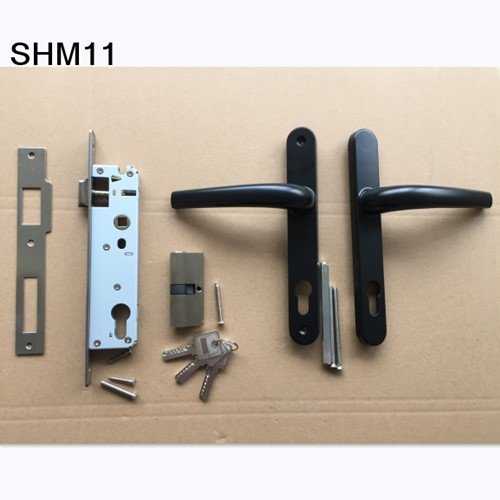
Abstract
This article provides a comprehensive and in-depth guide to the entire process of purchasing swing door handles for Italian customers. It systematically analyzes the characteristics of the Italian market, customer needs, and common pain points and offers practical solutions. Structured subheadings allow readers to quickly locate the information they need, and the FAQ and summary at the end further enhance the article’s practicality.
Chapter 1: Characteristics of the Italian Market and Analysis of Customer Needs
- 1.1 Unique Aesthetic and Cultural Preferences of the Italian Market
- As a design powerhouse, Italy has extremely high aesthetic standards for architectural components. Swing door handles are not only functional parts but also important elements of interior design. Italian customers typically prefer:
- A fusion of classic and modern: Italian design excels at combining traditional elements with modern lines.
- Premium materials: Stainless steel, brass, and bronze are highly favored.
- A variety of colors and finishes: From polished chrome to bronze, from matte to glossy.
- Ergonomic design: Comfortable feel and intuitive operation.
- As a design powerhouse, Italy has extremely high aesthetic standards for architectural components. Swing door handles are not only functional parts but also important elements of interior design. Italian customers typically prefer:
- 1.2 Italian Building Codes and Standards
- The Italian market has strict regulations for building components:
- UNI Standard: Italian national standard covering handle dimensions, strength, and safety.
- CE Certification: Mandatory EU certification ensuring products meet health, safety, and environmental standards.
- Anti-theft requirements: Especially for commercial and high-end residential projects.
- Accessibility design guidelines: Accessibility for people with disabilities must be considered in public spaces.
- The Italian market has strict regulations for building components:
- 1.3 Characteristics of the Italian Procurement Decision-Making Process
- Understanding the procurement decision-making process of Italian clients is crucial:
- Design-Driven Decisions: Architects and interior designers play a key role in the selection process.
- Long-Term Relationship Orientation: Italian business culture values stable supply relationships.
- Sample Testing Stage: Physical samples are typically required for evaluation.
- Multi-Level Decision-Making Mechanism: May involve end-users, designers, contractors, and developers.
- Understanding the procurement decision-making process of Italian clients is crucial:
Chapter 2: Common Pain Points and Solutions in the Procurement of Hinged Door Handles
- 2.1 Pain Point 1: Insufficient Design Match
- Problem Manifestation:
- Italian customers often find that the handle design is inconsistent with the architectural style or mismatched with the door panel and other hardware accessories.
- Solutions:
- Provide customized design services: Adjust design details according to specific project needs.
- Develop a series of products: Ensure that the handle’s design language is consistent with other hardware (such as hinges, locks).
- Create visualization tools: Provide 3D renderings or AR tools so that customers can see the actual effect before purchasing.
- Establish an Italian design team or collaborate: Hire local designers to understand market preferences.
- Problem Manifestation:
- 2.2 Pain Point 2: Unstable Quality and Non-compliance with Standards
- Problem Manifestation:
- Products experience problems such as fading, loosening, and corrosion during actual use, or do not meet Italian/EU standards.
- Solutions:
- Implement a rigorous quality management system: Achieve ISO 9001 certification and establish end-to-end quality control.
- Obtain Italian local certification: In addition to CE certification, strive for UNI certification or the Italian Quality Mark.
- Provide accelerated aging test reports: Simulate the product’s condition after long-term use.
- Establish a transparent supply chain: Ensure raw material traceability and compliance with EU environmental regulations.
- Problem Manifestation:
- 2.3 Pain Point Three: Delivery Delays and Logistics Issues
- Problem Manifestations:
- Italian customers place particular emphasis on on-time delivery; delays can impact the entire construction project’s progress.
- Solutions:
- Establish warehouses in Europe: Establish inventory within Italy or the EU to shorten delivery times.
- Implement digital supply chain management: Track order status in real time and provide early warnings of potential delays.
- Provide flexible production planning: Offer rapid response capabilities for small-batch, diversified orders.
- Partner with reliable logistics providers: Select logistics companies with strong distribution networks in Italy.
- Problem Manifestations:
- 2.4 Pain Point Four: Communication Barriers and Insufficient After-Sales Support
- Problem Manifestations:
- Language barriers and time zone differences lead to low communication efficiency and slow resolution of after-sales issues.
- Solutions:
- Establish an Italian-speaking customer service team: Equip sales and technical support staff whose native language is Italian.
- Provide localized technical documentation: Product manuals, installation guides, and maintenance instructions are all available in Italian.
- Establish European service centers: Set up after-sales support centers in Italy or neighboring countries.
- Regular customer follow-up system: Proactively understand product usage and prevent problems from occurring.
- Problem Manifestations:
- 2.5 Pain Point Five: Price Competitiveness and Value Reflection
- Problem Manifestation:
- Italian customers seek cost-effectiveness but are unwilling to sacrifice quality for low prices. Suppliers need to clearly communicate the value of their products.
- Solutions:
- Tiered pricing strategy: Offer products at corresponding price levels for different market segments.
- Value transparency: Clearly explain cost composition, such as materials, processes, and certification fees.
- Lifecycle cost analysis: Demonstrate the savings in long-term use of high-quality products.
- Flexible payment terms: Payment methods adapted to Italian business practices.
- Problem Manifestation:
Chapter 3: Product Strategy for the Italian Market
- 3.1 Material Selection and Surface Treatment
- The Italian market has specific material preferences:
- Stainless Steel Series: 316L medical-grade stainless steel is popular, especially in coastal areas where corrosion resistance is a concern.
- Brass Products: A commonly used material in traditional Italian design, requiring various surface treatments (polished, brushed, bronze).
- Innovative Material Applications: Such as ceramic inlays, glass elements, and environmentally friendly composite materials.
- Surface Treatment Technology: PVD coating provides more durable color options, aligning with Italian aesthetics.
- The Italian market has specific material preferences:
- 3.2 Ergonomic Design Elements
- Italian customers value user experience:
- Grip Comfort: Handle cross-sectional shape, edge treatment, and temperature conductivity.
- Intuitive Operation: Push-down and push-pull operation methods are intuitive.
- Wide Range of Users: Considering users of different ages and heights, including children and the elderly.
- Accessibility Design: Compliant with Italian D.M. 236/89 accessibility regulations.
- Italian customers value user experience:
- 3.3 Technological Innovation and Smart Technology
- The Italian market has a high acceptance of smart home accessories:
- Smart door handle integration: Compatible with smart home systems, such as fingerprint recognition and Bluetooth unlocking
- Energy efficiency considerations: Reduces thermal bridging and improves overall door insulation
- Enhanced security features: Anti-theft design, quick-opening function in emergencies
- Low-maintenance design: Self-lubricating bearings, dustproof structure, reduces maintenance needs
- The Italian market has a high acceptance of smart home accessories:
- 3.4 Sustainability and Environmental Standards
- Italy increasingly values the environmental performance of products:
- Use of environmentally friendly materials: Recycled aluminum, lead-free brass, low-VOC coatings
- Sustainability in the production process: Energy efficiency, waste recycling, and carbon footprint control
- Long lifespan design: Extends product replacement cycles and reduces resource consumption
- Obtaining environmental certifications, Such as EPD (Environmental Product Declaration), EU Ecolabel
- Italy increasingly values the environmental performance of products:
Chapter 4: Strategies for Building Successful Relationships with Italian Clients
- 4.1 Initial Contact and Relationship Building
- Attending Italian professional exhibitions: such as SAIE (Bologna Architecture Exhibition), MADE EXPO (Milan Architecture Exhibition)
- Localized marketing materials: Italian-language website, product catalog, conforming to local aesthetics
- Finding local agents: Select agents with a background in the construction industry and a stable client network
- Sample provision strategy: Efficiently handle sample requests, providing detailed technical information
- 4.2 Key Points for Quotation and Contract Negotiation
- Detailed quotation: Includes all possible costs to avoid subsequent price increases
- Flexible minimum order quantity: Adapts to the needs of small and medium-sized projects in Italy
- Clear payment terms: Understand commonly used payment methods in Italy (such as bank drafts, bank transfers)
- Liability and warranty terms: Clearly define the scope, duration, and division of responsibilities for the warranty.
- 4.3 Order Fulfillment and Logistics Management
- Transparent Production Progress: Regularly update production status and provide photo/video proof.
- Professional Packaging: Ensure products are undamaged during transportation; packaging reflects brand value.
- Customs Clearance Document Preparation: Complete and accurate commercial invoices, packing lists, certificates of origin, etc.
- Last Mile Delivery: Coordinate to ensure goods are delivered to the construction site or warehouse on time.
- 4.4 After-Sales Service and Long-Term Relationship Maintenance
- Installation Technical Support: Provide clear installation guidelines, with remote or on-site guidance when necessary.
- Rapid Response Mechanism: Set a commitment to respond to after-sales issues within 24 hours.
- Regular Product Update Notifications: Introduce new products and technologies to existing customers.
- Customer Feedback Collection System: Proactively collect user feedback and continuously improve products.
Chapter 5: Italian Hinged Door Handle Market Trends and Future Outlook
- 5.1 Design Trend Evolution
- Minimalism Continues to Be Popular: Concealed, Integrated Designs
- Retro Style Revival: Modern Interpretation of Classic Italian Design Elements
- Personalized Customization Growth: Customers Desire Unique Design Elements
- Bolder Colors: No Longer Limited to Metallic Colors, More Color Options
- 5.2 Technology Integration Direction
- IoT Integration: Door Handles as Smart Home Entry Points
- Biometric Technology: Fingerprint and Facial Recognition Integration
- Health-Related Functions: Antibacterial Surfaces, Contact Sensor Technology
- Energy Generation Capability: Kinetic Energy Converted into Electrical Energy to Power Smart Functions
- 5.3 Market Structure Changes
- Online Procurement Growth: Especially for Standardized Products
- Increased Direct Procurement: Large Project Developers Prefer Direct Cooperation with Manufacturers
- Sustainability Becomes a Core Competitive Advantage: Environmentally Friendly Products Gain Premium Pricing
- Service Value-Added Competition: Product Differentiation Decreases, Service Becomes the Focus of Competition
- 5.4 Recommendations for Suppliers
- Continuous Design Innovation: Invest in R&D to keep pace with Italian design evolution.
- Strengthen Local Presence: Consider establishing an office or showroom in Italy.
- Digitalize the Customer Experience: Digitize the entire process from inquiry to after-sales service.
- Establish a Sustainable Supply Chain: Ensure material sourcing and manufacturing processes comply with ESG standards.
Chapter 6: FAQ
- 6.1 Product Standards and Certifications
- Q1: What certifications are required for swing door handles sold in Italy?
- A1: The most basic is CE certification, which proves compliance with EU safety, health, and environmental requirements. In addition, obtaining Italian national standard UNI certification is recommended, especially in public projects and government tenders. For specific applications (such as fire-resistant door handles), relevant specific standards must also be met.
- Q2: Are there any special requirements for handle sizes in the Italian market?
- A2: Italy follows EU standards, but there are also local preferences. Typically, residential door handles are 120-160mm in length and 28-32mm in diameter. It is important to offer a variety of size options and ensure compliance with accessibility design specifications (D.M. 236/89).
- Q1: What certifications are required for swing door handles sold in Italy?
- 6.2 Materials and Surface Finishes
- Q3: What materials do Italian customers prefer?
- A3: Stainless steel (especially 316L grade) and brass are the most popular. Stainless steel is suitable for modern designs, while brass is more commonly used for classic or vintage styles. In recent years, environmentally friendly materials and innovative composite materials have also gained attention.
- Q4: Which is more suitable for the Italian market, PVD coating or traditional electroplating?
- A4: PVD (Physical Vapor Deposition) coatings are more durable, offer richer colors, and are environmentally friendly, making them increasingly popular in the high-end market. However, traditional electroplating is less expensive and still has a market. We recommend providing both options and clearly explaining the differences.
- Q3: What materials do Italian customers prefer?
- 6.3 Regarding Procurement and Logistics
- Q5: Can the Minimum Order Quantity (MOQ) be reduced?
- A5: Italy has many small projects with a demand for low MOQ. We have designed a flexible production system specifically for the Italian market, with standard products having an MOQ as low as 50-100 pieces, and customized products determined based on design complexity.
- Q6: How long does it usually take to ship from China to Italy?
- A6: Sea freight typically takes 30-45 days, and air freight takes 5-7 days. To shorten delivery time, we have a European warehouse in Germany, and popular products can be delivered to Italy within 7-14 days. For urgent orders, expedited production options are available.
- Q5: Can the Minimum Order Quantity (MOQ) be reduced?
- 6.4 Installation and After-Sales Service
- Q7: Do you provide installation guidance and support?
- A7: Yes, we provide detailed Italian installation guides with step-by-step illustrations. For complex products or large projects, remote guidance can be provided via video call. We also collaborate with local technical teams in Italy to provide on-site support (at an additional cost).
- Q8: What is the product warranty period? What does the warranty cover?
- A8: We offer a 5-year limited warranty covering defects in materials and workmanship. Normal wear and tear, improper installation or use, and natural disasters are not covered under warranty. Specific terms are detailed in the sales contract.
- Q7: Do you provide installation guidance and support?
- 6.5 Customization and Design Services
- Q9: Can I customize the handle design?
- A9: Yes. We offer custom design services for Italian clients. The minimum order quantity depends on the complexity of the design. We recommend providing a design concept or sketch first, and our design team will assess the feasibility and provide a quote.
- Q10: How do you ensure that customized products meet Italian aesthetic standards?
- A10: We have a design collaboration office in Milan with local designers involved in the custom design review process. In addition, we will provide historical project case studies for reference and suggest communicating and confirming with end users or Italian architects during the design phase.
- Q9: Can I customize the handle design?
Summary
Successfully supplying swing door handles to Italian customers requires a deep understanding of the multifaceted needs of this unique market. Italy is not only a market with extremely high aesthetic demands but also one with stringent regulations regarding quality, standards, and sustainability.
Key Takeaways:
- Design First: Italy is a design powerhouse, and products must combine aesthetic value with functionality. Suppliers should invest in design capabilities or collaborate with Italian designers.
- Quality Foremost: Italian customers are willing to pay a premium for high-quality products, but demand clear value propositions. Well-certified and thoroughly tested products are more likely to gain acceptance.
- Relationship-Oriented: Building long-term relationships is more important than single transactions. This requires suppliers to continuously invest in communication, reliability, and after-sales service.
- Adaptability: The Italian market is diverse, with varying needs from large developers to small design studios. A flexible production and supply system is key to success.
- Forward-Looking Strategy: Pay attention to changing market trends, especially in areas like smart technology, sustainability, and personalized customization, and plan product development.
For suppliers, while the Italian market has high barriers to entry, once a reputation and stable partnerships are established, sustainable business growth and brand value enhancement will follow. The key lies in being customer-centric, deeply understanding Italian architectural culture, and providing products and services that exceed expectations.
Ultimately, successful suppliers are not just product providers, but design partners and problem-solving providers for their Italian clients. This role shift is crucial from simple export to deep market penetration.