


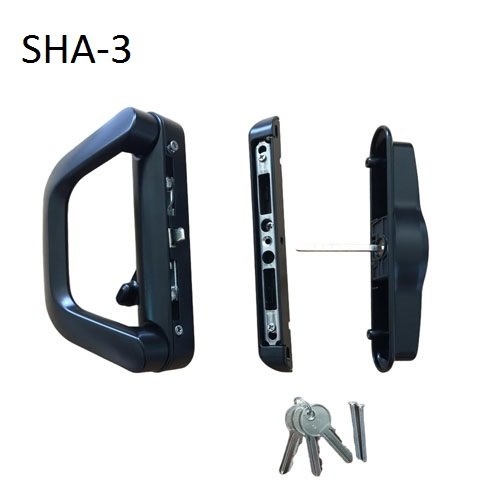
Overview: Why are Aluminum Sliding Door Locks So Important?
In modern architecture and home design, aluminum sliding doors have become a common choice for balconies, living rooms, kitchens, and other areas due to their lightweight, durability, aesthetics, and space-saving features. However, many users, while enjoying the convenience of aluminum sliding doors, often overlook a crucial component—the lock. A beautifully designed aluminum sliding door, without a suitable lock to ensure security, is like a beautiful exterior hiding a rotten interior.
Aluminum sliding door locks are not only the first line of defense for security but also a significant factor affecting the user experience and overall aesthetics. The market offers a wide variety of aluminum sliding door locks of varying quality; improper selection can lead to security risks, inconvenience, or even damage to the door. This article will delve into various aspects of aluminum sliding door locks to help you make an informed choice and address pain points in practical use.
Core Functions and Design Considerations of Aluminum Sliding Door Locks
- Security: A Primary and Uncompromising Requirement
- Aluminum sliding doors typically connect indoor and outdoor spaces, such as balconies and gardens, making them potential entry points. High-quality door locks should possess the following security features:
- Anti-pry design: Professional aluminum sliding door locks employ concealed locking points or multi-point locking systems, making them difficult to pry open from the outside. High-end products even feature anti-saw bolts made of high-strength alloy materials to resist mechanical damage.
- Resistance to forced entry: The lock body structure should be able to withstand a certain degree of impact and pressure. High-quality locks typically use reinforced steel plates or zinc alloy shells with precise internal structures that are not easily damaged by force.
- Lock cylinder rating: The lock cylinder is the core of the lock; the higher the rating, the greater the security. It is recommended to choose a Class C lock cylinder (Chinese standard) or equivalent international standard. These lock cylinders can resist technical opening for more than 10 minutes, and the keys are complex and difficult to copy.
- Anti-climbing device: For sliding doors, some advanced locks are designed with anti-climbing functionality, ensuring the bolt remains locked even if the door is lifted.
- Aluminum sliding doors typically connect indoor and outdoor spaces, such as balconies and gardens, making them potential entry points. High-quality door locks should possess the following security features:
- Convenience: A smooth user experience in daily use
- Security should not come at the expense of convenience. Modern aluminum sliding door locks offer numerous innovations in convenience:
- One-handed operation: Considering users may be holding items, excellent locks allow for easy one-handed locking and unlocking. Some products feature push-down or push-pull handles, conforming to ergonomics.
- Child safety locks: For families with children, products with child safety locks are available to prevent accidental opening and potential dangers.
- Differentiated operation from the inside and outside: Some lock designs allow for quick opening from the inside (in emergencies), while requiring a key from the outside, balancing security and convenience.
- Smart integration: With the development of smart homes, many aluminum sliding door locks now support fingerprint, password, Bluetooth, or remote control, providing a keyless entry experience.
- Security should not come at the expense of convenience. Modern aluminum sliding door locks offer numerous innovations in convenience:
- Durability: The value of a long-term investment
- Aluminum sliding doors are typically exposed to various environmental conditions, requiring durable locks:
- Material selection: High-quality locks use 304 stainless steel, zinc alloy, or high-strength aluminum alloy for key components, with surface treatments such as electroplating, spraying, or anodizing, offering corrosion resistance and wear resistance.
- Climate Adaptability: Locks should withstand temperature changes, humidity, and UV exposure without failure. Especially in coastal areas, high resistance to salt spray corrosion is required.
- Mechanical Structure Lifespan: Testing standards require high-quality locks to withstand over 100,000 opening and closing cycles while still functioning normally, equivalent to over 20 years of daily use.
- Low Maintenance Requirements: Well-designed locks require almost no maintenance, featuring a self-lubricating system or using self-lubricating materials to maintain smooth operation over the long term.
- Aluminum sliding doors are typically exposed to various environmental conditions, requiring durable locks:
Main Types and Selection Guide for Aluminum Sliding Door Locks
- Classification by Installation Method
- Embedded Locks: Installed inside the door frame or door leaf, offering a clean appearance and not affecting the door’s lines. These locks typically require professional installation, offer high security, but are more expensive.
- Surface Mount Locks: Fixed to the door surface, simple to install, and easy to maintain. Suitable for later installations or budget-constrained situations, but slightly less aesthetically pleasing than embedded locks.
- Multi-Point Linkage Locks: Control multiple locking points through a single operating point, typically distributed along the door edge. Provides extremely high security, particularly suitable for large sliding doors.
- Concealed Locks: Completely hidden within the door frame, the lock body is almost invisible, maintaining the overall aesthetics of the door. Commonly found in high-end system doors and windows.
- Classification by Operating Mechanism
- Crescent Lock: A traditional, simple lock where the bolt hooks onto the door frame by rotating the handle. Inexpensive but with lower security, suitable for low-risk areas.
- Bolt Lock: Locks by inserting a bolt into a ground or top track, providing good anti-lift protection. Commonly found in commercial locations.
- Handle-Integrated Lock: Integrates the locking function into the door handle, offering intuitive operation and a uniform appearance. The most common choice for residential properties.
- Electronic/Smart Lock: Uses electronic control, supporting multiple unlocking methods. Offers convenience and advanced features such as access logging and remote control.
- Selection Guide: Matching Needs and Budget
- Risk Assessment: Choose the lock level based on the door’s location and the area’s security requirements. Higher security levels are needed for street-facing or low-rise residences.
- Door Compatibility: The lock must be compatible with the door’s profile, thickness, and structure. Measure key dimensions such as door thickness and track type before purchasing.
- Frequency of Use: For high-frequency use areas (such as commercial spaces and main home passageways), choose products with enhanced durability.
- Aesthetic Coordination: The color, style, and finish of the lock should coordinate with the door and interior design.
- Budget Balance: Find a balance between security, durability, and aesthetics. Don’t chase the most expensive, but avoid the lowest-priced products, as they often compromise on key performance aspects.
Common Problems and Pain Point Solutions
- Pain Point 1: Loose or wobbly locks affect user experience
- Causes: Improper installation, loose screws, or poor lock quality are common causes. Sliding doors experience vibration and stress during use, causing poor-quality locks to gradually loosen.
- Solutions:
- Choose high-quality locks: Prioritize branded products, as they typically have more precise manufacturing tolerances and more robust fixing systems.
- Professional installation: Ensure installers use appropriate tools, all screws are tightened securely, and use threadlocker if necessary.
- Regular inspection: Check lock tightness every six months and tighten loose screws promptly.
- Reinforce support: For large or heavy doors, consider adding extra support points or choosing a multi-point locking system to distribute stress.
- Pain Point 2: Rust or corrosion of locks affects aesthetics and function
- Causes: Aluminum sliding doors are often exposed to humid, salty air (in coastal areas) or polluted environments; inferior surface treatments cannot provide sufficient protection.
- Solutions:
- Material Upgrade: Choose a 304 stainless steel or high-quality zinc alloy body, with surface treatment meeting at least a 240-hour neutral salt spray test standard.
- Regular Cleaning: Wipe the lock surface monthly with a soft cloth to remove corrosive substances. Avoid using acidic or strong alkaline cleaners.
- Lubrication and Protection: Use a dedicated silicone-based lubricant on moving parts quarterly. Avoid using oil-based lubricants as they attract dust.
- Environmental Adaptability: In extreme environments, consider adding a rain canopy or choosing a product specifically designed for harsh environments.
- Pain Point 3: Lost Keys or Forgotten Passwords Leading to Inaccessibility
- Cause Analysis: Traditional locks rely excessively on physical keys, while smart locks may become inaccessible due to battery depletion or system malfunction.
- Solutions:
- Backup Plan: For traditional locks, keep a spare key in a safe place or with a trusted friend or family member. For smart locks, retain a mechanical key as a backup.
- Multi-Factor Authentication: Choose smart locks that support multiple unlocking methods, such as a combination of fingerprint + password mechanical key.
- Remote Management: Some smart locks support remote generation of temporary passwords or unlocking via an app, allowing access even when you’re not home.
- Battery Management: Choose smart locks with low battery warnings and replace batteries regularly (usually once a year).
- Pain Point 4: Accidental Opening by Children or Pets, Causing Safety Hazards
- Cause Analysis: Traditional locks are easy to operate, and children or pets may accidentally open them, potentially causing injury, especially in emergencies like earthquakes.
- Solutions:
- Child Safety Locks: Choose products with independent child lock functions, requiring specific operation (such as pressing and rotating simultaneously) to open.
- High-Level Installation: Install the main lock at a height inaccessible to children, and use it in conjunction with a low-level simple lock.
- Smart Sensing: Some smart locks can be set to automatically lock during specific time periods or sound an alarm when abnormal opening is detected.
- Educational Integration: Integrate with family safety education to help children understand the importance of door lock security.
Installation and Maintenance Best Practices
- The Importance of Professional Installation
- The performance of aluminum sliding door locks largely depends on the quality of installation. Professional installation ensures:
- Precise Positioning: Perfect alignment of the locking points and keyholes, reducing wear and operating resistance.
- Structural Integrity: No damage to the door structure during installation, especially for recessed locks.
- Functional Testing: Comprehensive testing of all functions after installation, including locking strength, smooth operation, and security features.
- Warranty Validity: Many brands require professional installation to maintain the product warranty.
- Daily Maintenance Schedule
- Weekly: Clean the lock surface with a soft cloth and check visible parts for any abnormalities.
- Monthly: Test all lock functions, including the main lock, auxiliary locks, and any security devices.
- Quarterly: Clean the tracks and bolt contact areas and apply a specialized lubricant.
- Six Months: Check all fasteners, tighten any loose screws; test the emergency opening function.
- Annually: Conduct a comprehensive inspection, including the condition of the lock cylinder, bolt wear, and the functionality of electronic components (if applicable).
- Troubleshooting Guide
- Lock jamming or rough handling: Clean the latch and contact surfaces, apply a small amount of graphite powder or silicone-based lubricant.
- Key turning difficulty: Check the lock cylinder for foreign objects. Use a dedicated lock cylinder lubricant; do not use oil-based lubricants.
- Electronic lock unresponsive: Replace the battery, check the battery contacts for cleanliness, and reset the system.
- Latch not fully extended: Adjust the lock plate position on the door frame to ensure alignment.
- The performance of aluminum sliding door locks largely depends on the quality of installation. Professional installation ensures:
Future Trends and Technological Innovation
- Smart Integration and the Internet of Things
- Future aluminum sliding door locks will be more deeply integrated into smart home systems:
- Biometric Upgrades: In addition to fingerprints, facial recognition, vein recognition, and other technologies will improve security and convenience.
- Scene Awareness: Locks can sense environmental changes, such as automatically locking when strong winds are detected, or linking with security systems.
- Energy Management Integration: Integrating with the home energy system, automatically adjusting the thermostat when the lock detects no one is home.
- Materials and Manufacturing Innovation
- Self-Healing Materials: Coating materials can automatically repair minor scratches, maintaining a long-lasting aesthetic appearance.
- Lightweight and High-Strength: New alloys and composite materials reduce weight while increasing strength.
- Environmentally Friendly Manufacturing: Increased use of recyclable materials and environmentally friendly surface treatment technologies.
- Security Technology Evolution
- Anti-Tailgating Technology: Detects and prevents unauthorized personnel from following authorized personnel into the premises.
- Encrypted Communication: Smart locks use bank-grade encryption for wireless communication, preventing signal interception and replay attacks.
- Distributed Security: Utilizes blockchain technology to achieve decentralized management of access permissions.
- Future aluminum sliding door locks will be more deeply integrated into smart home systems:
FAQ
Q1: Do aluminum sliding door locks need to be replaced periodically?
A: High-quality aluminum sliding door locks can last 15-20 years under normal use and maintenance. However, replacement should be considered in the following situations: frequent malfunctions, obvious wear, upgrade to a higher security standard (e.g., from a Class A lock cylinder to a Class C cylinder), or incompatibility of the original lock after door replacement.
Q2: Which is more suitable for aluminum sliding doors: smart locks or traditional mechanical locks?
A: This depends on individual needs and environment. Smart locks offer keyless entry, remote management, and other functions, suitable for users who are tech-savvy and frequently forget their keys. Traditional mechanical locks have a simple structure and high reliability, suitable for users who want a simple solution or are unfamiliar with electronic devices. Many modern families choose hybrid locks that combine the features of both.
Q3: How to determine the security level of an aluminum sliding door lock?
A: Please refer to the following indicators: 1) Lock cylinder grade (Chinese standard C is the highest); 2) Anti-technical opening time (should exceed 5 minutes); 3) Material thickness and hardness; 4) Number of locking points (multiple points are better than single points); 5) Whether it has passed authoritative certification (such as Ministry of Public Security testing, EN/ANSI standards). The technical parameters of branded products are usually more reliable.
Q4: Does installing an aluminum sliding door lock require changing the door structure?
A: It depends on the lock type. Surface-mounted locks usually do not require changing the door structure; embedded locks require slotting or drilling, which may change the door structure; concealed locks are usually integrated during door manufacturing. For existing doors, choose a lock suitable for the existing structure or consult a professional installer.
Q5: How long do smart lock batteries last? What if they run out of power?
A: Most smart locks use 4-8 AA batteries, which can last 8-18 months under normal use. High-end products have low battery warnings (1 month in advance). In case of power failure, the following methods can be used: 1) Use a spare mechanical key; 2) Use an external power bank to temporarily supply power through a specific interface; 3) Some locks support emergency power supply from a 9V battery. It is recommended to check the battery status regularly.
Q6: What special precautions should be taken when choosing aluminum sliding door locks in coastal areas?
A: Coastal areas suffer from severe salt spray corrosion, so special attention should be paid to: 1) Choosing highly corrosion-resistant materials, such as 316 stainless steel; 2) The surface treatment level must meet at least 480 hours of neutral salt spray testing; 3) Avoiding direct contact between different metals to prevent electrochemical corrosion; 4) Increasing the cleaning frequency, rinsing off salt deposits with clean water weekly; 5) Consider adding a protective cover or choosing a fully enclosed lock design.
Q7: How to prevent aluminum sliding door locks from being technically opened (lock picking)?
A: The following measures can be taken: 1) Choose a lock cylinder with a security level of C or higher; 2) Install anti-pry plates to reinforce the door frame; 3) Choose a lock with multiple locking points; 4) Install an independent alarm that sounds when vibrated or pried; 5) Keep the lock clean and regularly check for signs of foreign objects being inserted; 6) For smart locks, ensure wireless communication encryption to prevent signal interception.
Q8: Can I install an aluminum sliding door lock myself?
A: Simple surface-mount locks can be attempted by users with basic tools and hands-on skills. However, embedded, multi-point linkage, or smart locks are recommended for professional installation because: 1) Precise measurements and drilling are required; 2) Incorrect installation may damage the door or lock; 3) It may affect the warranty terms; 4) Security performance depends on correct installation. At least the first installation should be completed by a professional.
Summary
While aluminum sliding door locks are small components, they bear multiple responsibilities: security, convenience, and aesthetics. In today’s era of increasing security awareness and the pursuit of a higher quality of life, choosing the right aluminum sliding door lock is no longer a simple accessory selection, but a crucial decision regarding overall home security strategies and lifestyle.
Through this comprehensive analysis, we understand that a high-quality aluminum sliding door lock should balance three core elements: security, convenience, and durability. The market offers a wide variety of lock types, from traditional mechanical locks to intelligent integrated systems, each with its applicable scenarios and advantages and disadvantages. Users should make a comprehensive judgment based on actual risk assessment, usage habits, budget constraints, and aesthetic preferences.
Installation and maintenance are equally critical. Professional installation ensures the lock performs optimally, while regular maintenance extends its lifespan and maintains its best condition. Addressing common pain points, modern lock technology has provided various solutions, from material innovation to intelligent functions, continuously breaking through traditional limitations.
Looking to the future, aluminum sliding door locks will continue to develop towards greater intelligence, security, and environmental friendliness, integrating more deeply into the overall building ecosystem. No matter how technology advances, the core principle remains unchanged: providing people with a safe and convenient living environment. Ultimately, investing in a high-quality aluminum sliding door lock not only provides physical protection for your property but also ensures the safety and peace of mind of your family. Between the opening and closing of the door, the lock silently guards the boundary between the inside and outside worlds, making every push and pull a harmonious experience of safety and freedom.