


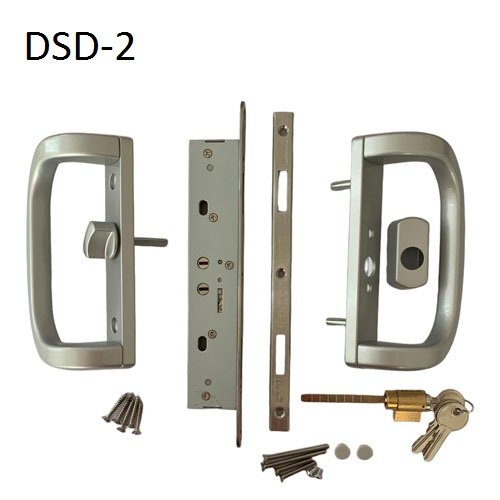
Introduction: Why is the choice of door locks so critical in high-end commercial projects?
In high-end commercial projects, every detail carries the weight of brand image, user experience, and security. Aluminum sliding doors, a common design element in modern commercial buildings, not only serve the functions of space division and circulation guidance but are also an important component of the overall project aesthetics. Door locks, as the “security heart” of these doors, are often underestimated, yet their selection directly impacts the project’s security, operational efficiency, and brand perception.
Choosing aluminum sliding door locks in high-end commercial projects faces multiple challenges: How to achieve top-level security without compromising minimalist aesthetics? How to ensure long-term reliability in a frequently used commercial environment? How to balance initial investment with long-term maintenance costs? This article will delve into these questions, providing architects, developers, and project managers with a complete framework for selecting aluminum sliding door locks.
Part 1: Understanding the Specific Needs of High-End Commercial Projects
- 1.1 Unique Challenges of High-End Commercial Environments
- High-end commercial projects—such as five-star hotels, luxury retail stores, top-tier office buildings, and upscale clubs—place far higher demands on aluminum sliding door locks than conventional standards:
- Aesthetic Integrity Requirements: In the trend of minimalist design, door locks should not be visual distractions but should be integrated into the overall design language. The lines, materials, and surface finishes of the locks must be perfectly coordinated with the aluminum frame, glass, and other hardware.
- High-Intensity Usage Scenarios: Sliding doors in commercial spaces often experience a much higher frequency of use than those in residential spaces. A busy hotel lobby door may experience hundreds of openings and closings daily, placing extremely high demands on the durability of the locks.
- Multi-Dimensional Security Needs: In addition to basic anti-theft functions, internal access control, emergency evacuation compliance, and integration with building intelligent systems must also be considered.
- Brand Image Conveying: Every touchpoint tells a brand story. The texture and tactile feel of the door locks silently convey the project’s quality positioning.
- High-end commercial projects—such as five-star hotels, luxury retail stores, top-tier office buildings, and upscale clubs—place far higher demands on aluminum sliding door locks than conventional standards:
- 1.2 The Impact of Technical Characteristics of Aluminum Sliding Door Systems on Locks
- The structural characteristics of aluminum sliding doors directly determine the range of lock options:
- Profile Structure Limitations: The cavity size and structural strength of aluminum profiles limit the installation space and load-bearing capacity of the lock body. The narrow frame design commonly used in high-end projects further compresses the available space.
- Glass and Frame Relationship: All-glass sliding doors and sliding doors with crossbeams have different requirements for lock installation, especially when multi-point locking systems are involved.
- Sliding Mechanism Compatibility: Hanging and floor-mounted sliding doors have different space requirements for the bottom of the lock. Floor-mounted systems may need to consider the impact of the track on the bolt position.
- The structural characteristics of aluminum sliding doors directly determine the range of lock options:
Part 2: Core Selection Criteria for High-End Aluminum Sliding Door Locks
- 2.1 Security Performance: A Multi-Layer Defense System Beyond Basic Protection
- 2.1.1 Mechanical Security Level: Understanding Lock Cylinder Standards
- For high-end commercial projects, the lock cylinder is the first line of defense for security. Pay attention to the following standards:
- European Standard EN 1303: This standard classifies lock cylinders into levels 1-6. High-end commercial projects should choose lock cylinders of at least level 4, whose anti-drilling, anti-pry, and anti-pull-out performance has undergone rigorous testing.
- Multi-point Locking System: Single-point locks are insufficiently secure on wide sliding doors. High-end projects should consider three-point or five-point locking systems, locking the door leaf and frame at multiple positions, significantly improving anti-pry capabilities.
- Explosion-proof and Anti-saw Latch: Latches made of hardened steel or special alloys effectively resist sawing and impact. Some high-end locks use hook-type latches for better resistance to prying.
- For high-end commercial projects, the lock cylinder is the first line of defense for security. Pay attention to the following standards:
- 2.1.2 Electronic Security Integration: A Necessary Consideration for the Smart Era
- Modern high-end commercial projects are increasingly integrating electronic access control:
- Encryption Technology Standards: Select electronic locks that support AES-128 or higher encryption standards to prevent signal interception or duplication.
- Interference Resistance: In commercial buildings with complex electromagnetic environments, locks should possess strong electromagnetic interference resistance.
- Audit Tracking Function: Record every unlocking event (time, user, method) to meet the security management needs of high-end commercial projects.
- Modern high-end commercial projects are increasingly integrating electronic access control:
- 2.1.1 Mechanical Security Level: Understanding Lock Cylinder Standards
- 2.2 Materials and Craftsmanship: The Invisible Difference in Quality
- 2.2.1 Material Selection: From Basic to Excellence
- Lock Body Shell: High-end locks typically use:
- 304 or 316 Stainless Steel: Excellent corrosion resistance, suitable for coastal or high-humidity environments
- High-Strength Aluminum Alloy: Anodized for stable color and high hardness
- Copper Alloy: A traditional high-end choice, naturally antibacterial and with a superior texture
- Internal Mechanical Components:
- Gears and transmission components should use phosphor bronze or specially reinforced nylon to ensure long-term smooth operation
- Springs should be made of stainless steel to prevent fatigue failure
- Lock Body Shell: High-end locks typically use:
- 2.2.2 Surface Treatment Processes: A Balance of Aesthetics and Durability
- High-end commercial projects have stringent requirements for surface treatment:
- Anodizing: The standard treatment for aluminum components. High-end projects should choose an oxide layer thickness of at least AA15 grade, with a color uniformity ΔE ≤ 1.5.
- PVD Coating: Physical vapor deposition technology produces extremely hard and richly colored surfaces, such as rose gold, black nickel, and bronze, maintaining color consistency while providing excellent wear resistance.
- Powder Coating: For specific color-matching needs, high-quality powder coatings offer virtually unlimited color choices, but it’s crucial to ensure coating thickness and adhesion meet high standards.
- High-end commercial projects have stringent requirements for surface treatment:
- 2.2.1 Material Selection: From Basic to Excellence
- 2.3 Design and Aesthetics: Invisible Luxury
- 2.3.1 Fusion of Form and Function
- Minimalist Design: High-end commercial projects tend to favor locks with concealed or understated designs. Recessed installations, flush-mounted lock plates, and slim handles are common choices.
- Material Consistency: The materials and surface finishes of the lock should form a cohesive design language with the door handles, hinges, and other hardware.
- Customization Possibilities: Top lock suppliers should offer a degree of customization, such as subtle integration of branding and adaptation to special dimensions.
- 2.3.2 Ergonomic Considerations
- Operating Force: High-quality push-pull locks should provide a smooth and effortless operating experience while ensuring safety. The unlocking torque should generally not exceed 1.5 N·m.
- Sound Quality: The sound of the latch extending and retracting, and the handle returning to its original position, should be deep and resonant, avoiding sharp or loose sounds that could detract from the premium feel.
- Tactile Temperature: Material selection and surface treatment should optimize the tactile experience, avoiding excessively cold metal feel, or considering a temperature-sensitive coating for cold climates.
- 2.3.1 Fusion of Form and Function
- 2.4 Durability and Maintenance: Life Cycle Cost Perspective
- 2.4.1 Testing Standards and Expected Lifespan
- Industry Testing Standards:
- Mechanical Cycle Test: High-end locks should pass at least 200,000 opening and closing cycles (Grade 1).
- Corrosion Test: Pass at least 96 hours of salt spray testing (ASTM B117 standard).
- Weather Resistance Test: Ability to resist UV radiation, temperature changes, and humidity fluctuations.
- Actual Lifespan Assessment: Estimate maintenance cycles based on usage frequency. For example, a door lock used 200 times daily, selected with a 200,000-cycle testing standard, has a theoretical lifespan of approximately 2.7 years, but the actual lifespan may vary depending on stress conditions.
- 2.4.2 Ease of Maintenance Design
- Modular Design: Core components can be replaced individually, avoiding the need to replace the entire lock for minor issues.
- Diagnostic Functions: Smart locks should have self-testing and fault warning functions to allow for advanced maintenance planning.
- Supplier Support: Understand the supplier’s local technical support capabilities, spare parts inventory, and average response time.
- Industry Testing Standards:
- 2.4.1 Testing Standards and Expected Lifespan
- 2.5 Smart Integration Capabilities: Future-Proof Design Thinking
- 2.5.1 Integration with Traditional Building Systems
- Protocol Compatibility: Ensure the lock supports building automation protocols already adopted or to be adopted in the project, such as BACnet, Modbus, KNX, or DALI.
- Power and Cabling Considerations: Plan for the power supply method (battery, hardwired, or hybrid) and data cabling requirements for the electronic lock.
- 2.5.2 Mobile Connectivity and User Experience
- Mobile Integration: Support access control via hotel management systems, office management software, or dedicated apps.
- Contactless Technology: In the post-pandemic era, locks supporting NFC, Bluetooth, or QR code unlocking via mobile phones are increasingly popular.
- Personalized User Experience: In scenarios such as hotels, support personalized room settings (such as temperature and lighting preferences) through the lock.
- 2.5.1 Integration with Traditional Building Systems
Part 3: Practical Selection Process and Implementation Guidelines
- 3.1 Requirements Analysis and Specification Formulation
- 3.1.1 Gathering Requirements from Multiple Stakeholders
- Conduct a requirements workshop involving the safety manager, facilities management, design team, and end-user representatives to clarify:
- Safety level requirements (based on risk assessment)
- Usage frequency and user type analysis
- Aesthetic and brand consistency requirements
- Budget constraints and lifecycle cost considerations
- Future expansion and upgrade possibilities
- Conduct a requirements workshop involving the safety manager, facilities management, design team, and end-user representatives to clarify:
- 3.1.2 Developing Technical Specifications
- Prepare detailed technical specifications, including:
- Minimum mechanical performance standards
- Material and surface treatment specifications
- Testing and certification requirements
- Smart function requirements
- Installation and maintenance requirements
- Warranty and service level agreement
- Prepare detailed technical specifications, including:
- 3.1.1 Gathering Requirements from Multiple Stakeholders
- 3.2 Supplier Evaluation and Product Selection
- 3.2.1 Supplier Screening Criteria
- Technical Capabilities: Does the supplier have experience supplying similar high-end projects? R&D investment percentage?
- Production Quality Control: Is the supplier certified to quality management systems such as ISO 9001? Quality control points during the production process?
- Project Support Capabilities: Can the supplier provide on-site measurement, installation guidance, and technical training?
- Sustainability Commitment: Environmental impact of materials and processes? Recycling and end-of-life solutions?
- 3.2.2 Sample Evaluation and Testing
- Require suppliers to provide samples for:
- Visual and tactile evaluation: Evaluate color and texture under actual lighting conditions, and test operational feel.
- Simulated usage testing: Conduct simple cyclic tests to evaluate smoothness and sound quality.
- Compatibility verification: Ensure a perfect fit with the selected profile system, without interference or gap issues.
- Require suppliers to provide samples for:
- 3.2.1 Supplier Screening Criteria
- 3.3 Installation and Commissioning: Details determine success or failure
- 3.3.1 The Importance of Professional Installation
- The performance of high-end locks largely depends on installation quality:
- Professional installation team: Require suppliers to provide or certify installation teams to ensure installers are familiar with product characteristics.
- Installation environment preparation: Ensure the dimensional accuracy, flatness, and verticality of the door leaf and frame meet requirements.
- Phase acceptance: Set up checkpoints before, during, and after installation to identify problems promptly.
- The performance of high-end locks largely depends on installation quality:
- 3.3.2 System Commissioning and Integration Testing
- Mechanical commissioning: Adjust the bolt travel, operating force, and multi-point locking synchronization.
- Electronic System Debugging: Testing communication, access control settings, and auditing functions with the building management system.
- User Training: Providing detailed operation and maintenance training for facility management personnel.
- 3.3.1 The Importance of Professional Installation
- 3.4 Long-Term Maintenance and Upgrade Strategy
- 3.4.1 Preventive Maintenance Plan
- Develop a maintenance plan based on usage frequency:
- Monthly Inspection: External cleaning, operational smoothness check
- Quarterly Inspection: Fastener inspection, electronic contact cleaning
- Annual Comprehensive Inspection: Internal mechanism inspection, wear assessment
- Develop a maintenance plan based on usage frequency:
- 3.4.2 Technology Upgrade Path Planning
- Considering potential future changes in needs:
- Lock Cylinder Upgrade Path: The possibility of upgrading mechanical locks to electronic locks
- Function Upgrade: The ability to add new functions through firmware updates
- System Expansion: Convenience of adding more doors or integrating new systems
- Considering potential future changes in needs:
- 3.4.1 Preventive Maintenance Plan
Part 4: Leading Technologies and Trends in the High-End Aluminum Sliding Door Lock Market
- 4.1 Innovative Technology Analysis
- No Visible Keyhole Design: Achieves a minimalist appearance while maintaining emergency mechanical opening functionality through concealed mechanical lock cylinders or purely electronic solutions.
- Adaptive Resistance Technology: Automatically adjusts the bolt travel based on door alignment to address slight misalignment caused by building settlement or temperature deformation.
- Energy Harvesting Technology: Harvests energy through door opening and closing actions to power the electronic lock, reducing the need for battery replacements.
- Biometric Integration: Integrates biometric technologies such as fingerprint and palm vein recognition for use in areas requiring extremely high security levels.
- 4.2 Sustainable Development Trends
- Material Innovation: Utilizes sustainable materials such as recycled aluminum and bio-based plastics while maintaining high performance.
- Long Lifespan Design: Modular design and easily replaceable components extend the overall product lifespan.
- Low-Power Electronics: Employs low-power chips and circuit designs, achieving a battery life of 3-5 years.
- 4.3 New Demands Post-Pandemic
- Antibacterial Surface: Utilizes copper alloys or surface treatments with added antibacterial coatings.
- Contactless operation: A contactless entry solution combining gesture recognition, mobile phone control, and automatic doors.
- Air tightness: Improved lock design to enhance door sealing, supporting healthy air management strategies for buildings.
Part 5: Cost-Benefit Analysis and Return on Investment
- 5.1 Life Cycle Cost Calculation
- High-end locks have a higher initial investment, but their true cost-effectiveness can be demonstrated by considering the following factors:
- Maintenance Cost Savings: High-quality locks typically have a 60-80% lower failure rate than economy locks.
- Security Incident Avoidance: The cost of a single security breach can far exceed the price difference of the locks.
- Brand Value Protection: The damage to a high-end brand image caused by faulty locks is difficult to quantify in monetary terms.
- Energy Efficiency Contribution: A well-sealed lock system can reduce HVAC energy consumption.
- High-end locks have a higher initial investment, but their true cost-effectiveness can be demonstrated by considering the following factors:
- 5.2 Example of Return on Investment Calculation
- Assuming a high-end hotel project with 200 rooms, consider two lock options:
- Economy Option: Unit price $200, expected lifespan 3 years, annual failure rate 8%
- High-end Option: Unit price $500, expected lifespan 8 years, annual failure rate 1.5%
- Comparison of Total Cost of Ownership over Five Years:
- Economy Option: Initial cost $40,000 + Replacement cost $40,000 + Repair cost ($200 × 8% × 5 × $80) = $6,400 = $86,400
- High-end option: Initial cost $100,000 + Repair cost ($200 × 1.5% × 5 × $100) = $1,500 = $101,500
- Although the total cost of the high-end option is still higher over five years, considering the brand image, safety record, and the fact that it doesn’t need to be replaced for six to eight years, the long-term return is significant.
- Assuming a high-end hotel project with 200 rooms, consider two lock options:
FAQ
Q1: What are the main differences between aluminum sliding door locks for high-end commercial projects and those for ordinary projects?
A: The main differences are: (1) Higher security standards, typically using multi-point locking and high-grade lock cylinders; (2) Superior materials and processes, using stainless steel, PVD coating, etc.; (3) More attention to detail in design, integrating with overall aesthetics; (4) Stricter durability testing standards; (5) Stronger intelligent integration capabilities; (6) Suppliers provide more comprehensive technical support and customization services.
Q2: How to determine if a lock is durable enough?
A: Check the product’s testing standards: number of cycle tests (high-end products should exceed 200,000 cycles), salt spray test time (at least 96 hours), and anti-pry test level. Also, request the supplier to provide usage cases and failure rate data for similar projects. On-site visits to installed projects to understand actual performance are also important.
Q3: How should I choose between electronic locks and mechanical locks?
A: This depends on specific needs. Electronic locks offer better access control, audit trails, and integration capabilities, making them suitable for areas requiring granular access control. Mechanical locks offer high reliability and simple maintenance, making them suitable for emergency exits or secondary areas. High-end projects often employ hybrid solutions: electronic operation combined with mechanical emergency opening.
Q4: What special considerations are there when choosing locks for narrow-frame aluminum sliding doors?
A: Narrow-frame designs leave limited installation space for locks, requiring special attention to: (1) selecting thin lock bodies specifically designed for narrow frames; (2) confirming the compatibility of the lock with the profile, which may require customized connectors; (3) implementing multi-point locking systems on narrow-frame doors is more complex, requiring precise engineering calculations; (4) considering concealed installation options to maintain visual simplicity.
Q5: How to ensure the compatibility of smart locks with existing building management systems?
A: (1) clarifying the communication protocols used by the existing system (e.g., BACnet, Modbus, etc.); (2) requiring lock suppliers to provide case studies demonstrating integration with these protocols; (3) conducting proof-of-concept testing, testing the integration effect of a small number of locks in a real-world environment; (4) considering lock systems using open APIs for future expansion.
Q6: What is the maintenance cycle for high-end locks? Q7: What specialized tools are needed?
A: Maintenance cycles depend on usage frequency. Generally, the following are recommended: (1) Less than 100 uses per day: basic inspection quarterly, comprehensive maintenance annually; (2) 100-300 uses per day: monthly inspection, comprehensive maintenance every six months; (3) More than 300 uses per day: inspection every two weeks, comprehensive maintenance quarterly. Specialized tools typically include branded adjustment tools, torque wrenches, and electronic diagnostic equipment, which should be provided or recommended by the supplier.
Q7: If the project is located in a highly corrosive environment (such as a coastal area), what are the special requirements for lock selection?
A: Highly corrosive environments require special attention to: (1) Material selection: 316 stainless steel is superior to 304 stainless steel, and aluminum should be anodized to at least AA15 grade; (2) Avoid direct contact between different metals to prevent electrochemical corrosion; (3) Select products that have passed at least 500 hours of salt spray testing; (4) Increase maintenance frequency, especially cleaning and lubrication; (5) Consider additional protective coatings.
Q8: What is the typical delivery time for customized locks? Will it affect the project schedule?
A: The delivery cycle for standard high-end locks is typically 8-12 weeks, while fully customized designs may take 16-20 weeks or longer. To avoid impacting project schedule: (1) Initiate the lock selection process early in the project; (2) Clearly distinguish between standard modifications (colors, markings) and complete redesigns; (3) Require suppliers to provide a detailed project timeline, including design confirmation, mold making, sample testing, and production stages; (4) Consider phased delivery, prioritizing the installation of locks in critical areas.
Summary
Choosing the right aluminum sliding door locks for a high-end commercial project is a multi-dimensional decision-making process, involving careful considerations of security, design, technology, and economics. In the highly competitive high-end commercial market, door locks are no longer just functional components, but rather an essential part of the brand experience and a long-term operational infrastructure.
Successful lock selection begins with a deep understanding of the project’s unique needs, is achieved through rigorous technical standard setting and supplier evaluation, and culminates in professional installation and ongoing maintenance. With technological advancements, locks are transforming from passive security devices into proactive nodes in the smart building ecosystem, creating new possibilities for space management, energy efficiency, and user experience.
Investing in a high-quality aluminum sliding door lock system is essentially investing in the long-term value of your project: creating a sustainable competitive advantage for high-end commercial projects by enhancing security, improving brand image, reducing operational disruptions, and extending product lifespan. In this field where details determine success or failure, wise choices will lay a solid and elegant foundation for your project.