


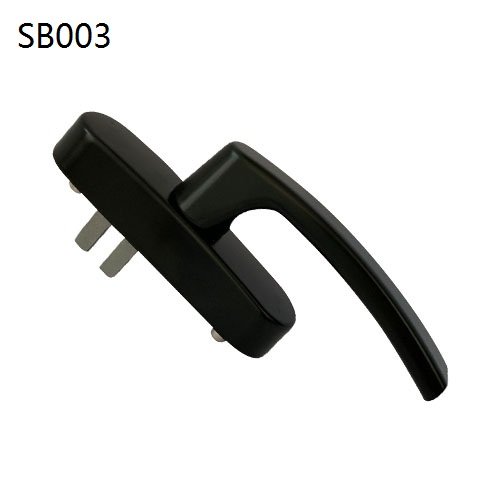
Overview: A Booming Landscape of Sino-Italian Aluminum Door and Window Hardware Trade
In recent years, the Italian construction industry and door and window manufacturing sector have seen a continuous increase in demand for Chinese aluminum door and window hardware. This trend not only reflects the reconfiguration of the global supply chain but also reveals the professional breakthroughs of Chinese manufacturing in specific fields. Italy, as a design capital and representative of high-end manufacturing in Europe, has extremely high requirements for quality and aesthetics. The ability of Chinese hardware to win recognition in this discerning market is due to a combination of multiple factors.
In terms of market size, the Italian door and window market has an annual output value exceeding 6 billion euros, with aluminum doors and windows accounting for approximately 35%, and this percentage is on the rise. China’s hardware exports to Italy have grown at an average annual rate of 12% over the past five years, particularly in the high-end customized hardware sector. This deepening trade relationship is both a natural result of economic globalization and a clear signal of the upgrading of China’s manufacturing industry.
I. Why is the Italian Market Turning to Chinese Suppliers?
- 1.1 Cost-Effectiveness and Price Competitiveness
- Italian door and window manufacturers face increasingly fierce market competition and cost pressures. While domestically produced hardware is of superior quality, its price is often 2-3 times that of similar Chinese products. For high-volume projects or mid-range market products, Chinese-made components offer an irresistible cost advantage.
- Key Data Comparison:
- High-end Italian hinges: €12-18/set
- Chinese hinges of equivalent quality: €5-8/set
- Savings: Approximately 50-60%
- Key Data Comparison:
- Italian door and window manufacturers face increasingly fierce market competition and cost pressures. While domestically produced hardware is of superior quality, its price is often 2-3 times that of similar Chinese products. For high-volume projects or mid-range market products, Chinese-made components offer an irresistible cost advantage.
- 1.2 Rapidly Narrowing Technological Gap
- Ten years ago, “Made in China” might still have been associated with “low-end” in the Italian market, but today the situation is completely different. Leading Chinese hardware companies have invested heavily in R&D, introducing advanced production lines and technical personnel from Germany and Italy, achieving European standards in materials science, surface treatment, and durability testing.
- Technological Breakthrough Areas:
- Multi-point locking system achieves RC2 anti-theft rating (EN 1627 standard)
- Surface treatment meets the AAMA 2605 standard (5000-hour salt spray test)
- Load-bearing hinges support a 180 kg door leaf (far exceeding the EN 1935 standard)
- Technological Breakthrough Areas:
- Ten years ago, “Made in China” might still have been associated with “low-end” in the Italian market, but today the situation is completely different. Leading Chinese hardware companies have invested heavily in R&D, introducing advanced production lines and technical personnel from Germany and Italy, achieving European standards in materials science, surface treatment, and durability testing.
- 1.3 Supply Chain Resilience and Delivery Reliability
- The COVID-19 pandemic exposed the fragility of global supply chains, and China, as the world’s factory, impressed Italian buyers with the integrity and responsiveness of its supply chain. Compared to the standard 8-12 week delivery time of European suppliers, Chinese suppliers can shorten it to 4-6 weeks, and urgent orders can even be completed within 2-3 weeks.
II. Core Needs and Pain Points of Italian Clients
- 2.1 Integration of Design Aesthetics and Italian Style
- Italy is a design powerhouse, and for them, doors and windows are not only functional components but also crucial elements of architectural aesthetics. Italian clients seek hardware that must:
- Visual Harmony: Perfectly integrates with modern minimalism or classic Italian style
- Diverse Surface Finishes: Offer high-end finishes such as brushed nickel, bronze, and black chrome
- Concealed Design: Increasingly, there is a preference for concealed hinges and locks
- Solutions: Leading Chinese suppliers have established European design centers, employing Italian designers to participate in product development and providing customized solutions that meet local aesthetic preferences.
- Italy is a design powerhouse, and for them, doors and windows are not only functional components but also crucial elements of architectural aesthetics. Italian clients seek hardware that must:
- 2.2 Performance Standards and Certification Requirements
- The Italian market has stringent requirements for window and door performance, especially:
- Air tightness, water tightness, and wind pressure resistance: Must comply with EN 12207-12210 standards.
- Theft security: At least RC2 level (EN 1627 standard).
- Durability: Minimum 10,000 opening and closing cycles (EN 1634-1 standard).
- Pain Point: Many Chinese suppliers claim to meet the standards, but cannot provide authoritative certifications.
- Solution: Leading Chinese manufacturers have invested in building European-accredited laboratories, obtaining CE, RAL, Qualicoat, and other certifications, and providing complete technical documentation.
- The Italian market has stringent requirements for window and door performance, especially:
- 2.3 Customization and Flexible Production
- The Italian window and door market is highly fragmented, with small-batch, multi-variety demands being common. Traditional Chinese suppliers excel at large-scale standardized production, making it difficult to meet small-batch customization needs.
- Breakthrough: China’s intelligent manufacturing upgrade has made flexible production possible. Through modular design and digital production lines, it is now possible to economically produce customized orders of at least 100 sets with a delivery time of no more than 6 weeks.
- 2.4 After-Sales Service and Technical Support
- Italian customers place particular emphasis on the supplier’s local support capabilities, including:
- On-site technical guidance
- Rapid problem response
- Guaranteed spare parts supply
- Installation training support
- Traditional barriers: Geographical distance and language barriers make after-sales service a challenge.
- Innovative model: Leading Chinese companies adopt a “European warehousing + local technical partner” model, establishing parts centers in Milan, Bologna, and other locations, and collaborating with local window and door associations to provide training services.
- Italian customers place particular emphasis on the supplier’s local support capabilities, including:
III. Detailed Analysis of the Competitive Advantages of Chinese Hardware Accessories
- 3.1 Material Innovation and Process Breakthroughs
- The Chinese hardware industry has made significant progress in materials science:
- Aluminum Alloy Formula Optimization: Development of a special alloy with 30% improved corrosion resistance
- Stainless Steel Precision Casting: 316L stainless steel application reaches marine-grade corrosion resistance standards
- Composite Material Application: Nylon and metal composite components achieve the optimal balance between strength and insulation
- The Chinese hardware industry has made significant progress in materials science:
- 3.2 Leap in Surface Treatment Technology
- Surface treatment is the “outer garment” of hardware accessories, directly affecting aesthetics and durability:
- Nano Coating Technology: Independently developed nano-ceramic coating achieves a hardness of 8H, far exceeding traditional electrophoretic paint
- PVD Vacuum Coating: Color consistency controlled at ΔE<1.0, meeting the requirements of high-end projects
- Double Anodizing: Film thickness reaches 25μm, ensuring durability under harsh climates
- Surface treatment is the “outer garment” of hardware accessories, directly affecting aesthetics and durability:
- 3.3 Intelligent Manufacturing and Quality Consistency
- The “Made in China 2025” strategy is driving the intelligent transformation of the hardware industry:
- Fully Automated Production Lines: Automation rate of key processes reaches over 85%
- AI Vision Inspection System: Defect detection accuracy rate of 99.7%, higher than manual inspection
- Digital Traceability System: Each product can be traced back to the raw material batch and production parameters
- The “Made in China 2025” strategy is driving the intelligent transformation of the hardware industry:
- 3.4 R&D Investment and Patent Accumulation
- Leading Chinese companies invest 5-8% of their revenue in R&D annually, far exceeding the industry average:
- Number of Patents: The top 10 companies have an average of 200+ patents
- International Standards Participation: Participating in the formulation of international standards, such as ISO 18040
- Industry-University-Research Cooperation: Establishing joint laboratories with universities such as Tsinghua University and Shanghai Jiao Tong University
- Leading Chinese companies invest 5-8% of their revenue in R&D annually, far exceeding the industry average:
IV. Procurement Process Optimization and Risk Management
- 4.1 Supplier Screening and Evaluation Framework
- Italian buyers should establish a systematic supplier evaluation system:
- Phase 1: Preliminary Screening
- Certification Qualification Verification (CE, ISO 9001, Qualicoat, etc.)
- European Customer Case Verification
- Production Capacity and Equipment Level Assessment
- Phase 2: In-Depth Evaluation
- On-site Audit (or commissioned to a third party)
- Sample Testing (Independent Laboratory Verification)
- Supply Chain Stability Analysis
- Phase 3: Establishing a Partnership
- Small-batch Trial Orders
- Establishment of Communication Mechanisms
- Long-term Agreement Negotiation
- Phase 1: Preliminary Screening
- Italian buyers should establish a systematic supplier evaluation system:
- 4.2 Quality Control Strategy
- Incoming Material Inspection Strategy:
- 100% Inspection of Key Dimensions
- Batch Verification of Material Composition
- Sampling Testing of Surface Treatment Thickness and Hardness
- Production Process Control:
- Monthly Production Video Audits
- Real-time Monitoring Data Access Rights for Key Processes
- Unscheduled Third-Party Surprise Inspections
- Final Inspection Before Shipment:
- AQL Sampling Standard Implementation (usually MIL-STD-105E Level II)
- Packaging and Labeling Special Inspection
- Verification of the Completeness of Accompanying Technical Documents
- Incoming Material Inspection Strategy:
- 4.3 Logistics and Tariff Optimization
- Logistics costs for hardware accessories imported from China to Italy account for approximately 12-18% of the product value. Optimization strategies include:
- Centralized Procurement and Consolidated Shipping: Reducing unit transportation costs
- Utilizing the China-Europe Railway Express: 15 days faster than sea freight and 60% cheaper than air freight
- Free Trade Zone Warehousing: Establishing buffer inventory in the Trieste or Venice Free Trade Zones
- Tariff Classification Optimization: Rationally utilizing HS code differences to reduce tariffs
- Logistics costs for hardware accessories imported from China to Italy account for approximately 12-18% of the product value. Optimization strategies include:
V. Success Stories: Italian Brands’ Procurement Practices in China
- 5.1 High-End Residential Project Case Study
- Project Background: The Milan “Vertical Forest” Phase II project required 5,000 sets of high-performance concealed hinges.
- Challenges:
- Extreme climate adaptability (temperature difference -10℃ to 40℃)
- 200kg load-bearing capacity requirement
- 25-year warranty requirement
- Emergency delivery time (10 weeks)
- Solution:
- The Chinese supplier “Haida Precision” provided a customized solution:
- Developed a special aluminum alloy formula, passing temperature cycling tests from -30℃ to 80℃
- Redesigned the load-bearing structure, testing a load-bearing capacity of 250kg
- Provided a 25-year warranty commitment based on accelerated aging test data
- Utilized a green channel for production, delivering 2 weeks ahead of schedule.
- Results: Project costs reduced by 35%, performance fully met requirements, and a long-term strategic partnership was established.
- The Chinese supplier “Haida Precision” provided a customized solution:
- 5.2 Historic Building Restoration Project
- Project Background: Restoration of doors and windows in a historic building complex in Venice, requiring hardware with a retro style and modern performance.
- Unique Challenges:
- The exterior must meet the requirements for historic building protection.
- The internal structure needs modern waterproofing and anti-theft functions.
- Small batch, multiple varieties (a total of 87 different specifications required).
- Strict environmental protection requirements for materials.
- Solution:
- China’s “Aobang Hardware” collaborated with an Italian design studio:
- 3D scanning of original hardware components to replicate exterior details.
- Multi-cavity internal structure with integrated modern locking systems.
- Flexible production line supporting minimum batch sizes of 15 sets.
- Chrome-free surface treatment process, meeting EU environmental standards.
- Results: While maintaining the historical appearance, the window performance was upgraded from its original state to meet modern energy standards.
VI. Future Trends and Market Outlook
- 6.1 Integration with Smart Technology and the Internet of Things
- In the next five years, smart door and window hardware will be the fastest-growing segment:
- Integrated sensors and automatic control systems
- Compatibility with smart home platforms (such as Apple HomeKit, Google Home)
- Energy management functions (automatic ventilation adjustment based on climate)
- Chinese suppliers have already made early investments in this field, holding 30% of global patents.
- In the next five years, smart door and window hardware will be the fastest-growing segment:
- 6.2 Sustainable Development and Circular Economy
- The EU’s “Green New Deal” will drive demand for sustainable hardware:
- Increased requirements for the use of recyclable materials
- Carbon footprint traceability and reporting requirements
- Long lifespan design and repairability
- Leading Chinese companies have begun product lifecycle assessments and launched “green product lines.”
- The EU’s “Green New Deal” will drive demand for sustainable hardware:
- 6.3 Enhanced Customization
- With the widespread adoption of digital manufacturing technologies, fully personalized hardware will become possible:
- Optimized design based on customer building parameters
- Further reduced costs for small-batch production
- Design-to-production cycle shortened to 72 hours
- With the widespread adoption of digital manufacturing technologies, fully personalized hardware will become possible:
- 6.4 Deepened Localization Services
- Chinese suppliers will increase their investment in localization in Europe:
- Establishing technical centers and showrooms in Italy
- Establishing a European parts warehouse network
- Developing local technical service teams
- Chinese suppliers will increase their investment in localization in Europe:
VII. FAQ
Q1: Can Chinese hardware accessories truly meet European standards?
Yes, leading Chinese manufacturers have fully adopted the European standards system. Many companies not only obtain CE certification but also proactively seek more stringent certifications such as German RAL and British BSI. The key is to choose suppliers with complete certifications and test reports and consider third-party verification.
Q2: What is the minimum order quantity (MOQ)? Can you accept small-batch customization?
Traditionally, Chinese suppliers had higher MOQs (over 1000 sets), but the market has changed. Suppliers focusing on the European market now typically accept MOQs of 300-500 sets, and for custom designs, the MOQ may be 100-200 sets. Flexible manufacturing technology makes small-batch production more economical.
Q3: What is the typical delivery time? How do you guarantee on-time delivery?
The delivery time for standard products is 4-6 weeks, and for customized products, it is 6-8 weeks. To ensure delivery, we recommend: 1) Choosing suppliers with European inventory; 2) Specifying penalties for delayed delivery in the contract; 3) Linking phased payments to delivery schedules; 4) Regularly tracking production progress.
Q4: How to handle quality issues and returns?
A comprehensive quality assurance agreement is crucial. It should include: 1) Clear quality standards and acceptance methods; 2) A commitment to problem response time (usually 24-48 hours); 3) Return and replacement procedures; 4) Quality compensation clauses. We recommend purchasing product quality insurance for the first order.
Q5: How to avoid intellectual property disputes?
Recommendations: 1) Ensure suppliers have independent design capabilities, rather than simple imitation; 2) Require suppliers to provide patent certificates; 3) Clearly define intellectual property ownership when customizing designs; 4) Consult a professional intellectual property lawyer, especially regarding design protection regulations in Italy and the EU.
Q6: What are the tariffs and import taxes? How to optimize them?
The typical EU tariff for aluminum door and window hardware is 2.7%-4.5%, plus a 22% VAT in Italy. Optimization Strategies: 1) Accurately classify HS codes; 2) Utilize trade agreements such as the EU-China Geographical Indications Agreement; 3) Consider establishing a transit warehouse in the EU Free Trade Area; 4) Consult a professional customs broker.
Q7: What should sample testing include?
Comprehensive sample testing should include: 1) Dimensional accuracy measurement; 2) Material composition analysis; 3) Surface treatment thickness and adhesion testing; 4) Mechanical performance testing (load-bearing capacity, torque, etc.); 5) Durability simulation testing; 6) Salt spray corrosion testing. It is recommended to use a European-accredited laboratory.
Q8: How to assess a supplier’s financial stability?
In addition to standard credit reports, you can also: 1) Request to view the audit reports for the past two years; 2) Understand their major customers and order continuity; 3) Check their reputation within the industry; 4) Check legal dispute records through the Chinese business information system; 5) Consider using supply chain finance tools to mitigate risk.
Summary
The preference of Italian customers for Chinese aluminum door and window hardware is not accidental, but rather the result of the combined effects of global supply chain optimization, the upgrading of China’s manufacturing industry, and changing market demands. Chinese suppliers, through continuous technological innovation, quality improvement, and service enhancement, have successfully broken the stereotype of “low quality, low price” and gained recognition in the high-end market.
For Italian buyers, the key to successful procurement lies in systematic supplier management: from rigorous screening and evaluation to clear quality standards and effective risk control. At the same time, fully leveraging the advantages of the Chinese supply chain, such as cost-effectiveness, technological capabilities, and responsiveness, can significantly enhance the market competitiveness of their products.
Looking ahead, with the deepening trends of intelligentization and sustainable development, Sino-Italian cooperation in this field will become even closer. Chinese suppliers will continue to increase product added value and service localization, while Italian buyers will gain more diverse and higher-quality choices. This win-win trade relationship not only promotes the economic development of both countries but also provides the global construction industry with better door and window solutions.
A successful Sino-Italian hardware trade is built on mutual understanding, transparent communication, and common standards. As cooperation between the two sides deepens, we have reason to believe that more innovative breakthroughs will emerge in this field, making a greater contribution to improving the quality of buildings worldwide.