


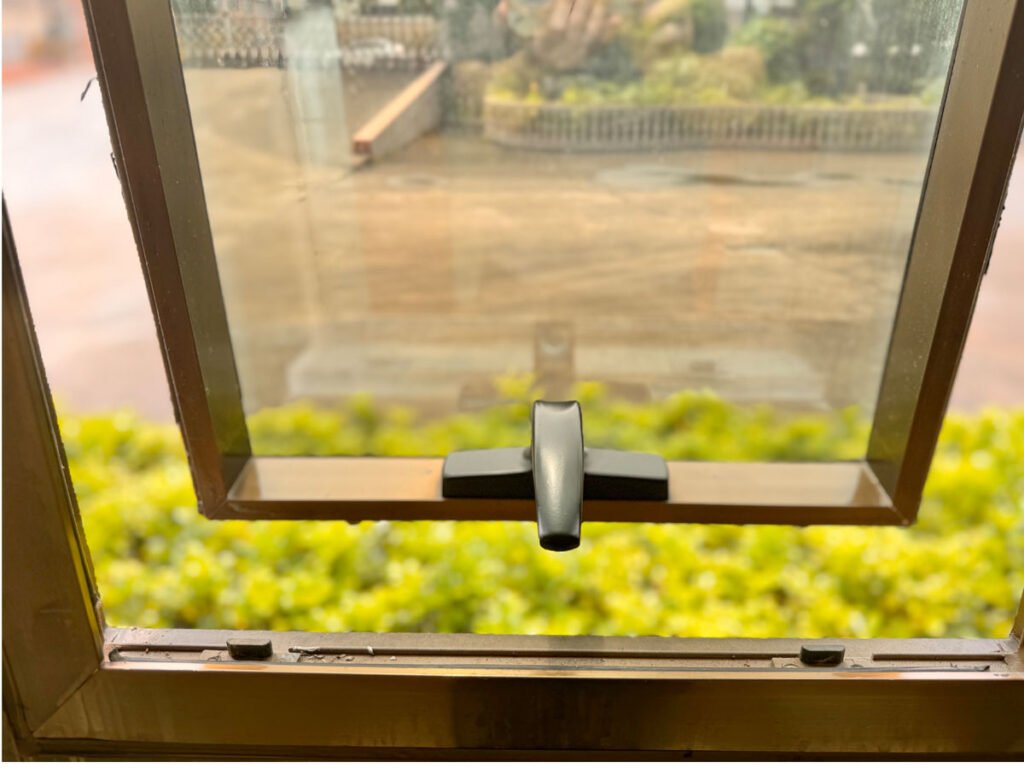
Introduction: The Transformation of the Aluminum Door and Window Hardware Industry in the Context of Globalization
In the wave of globalization in the construction industry, aluminum door and window hardware, as the “joints” and “nerves” of door and window systems, directly determines the overall performance and aesthetic value of buildings through its quality and innovation. With rising global green building standards, increasing demand for intelligent systems, and supply chain restructuring, the aluminum door and window hardware industry is facing unprecedented transformation pressures and market opportunities. As a world-leading production base for aluminum door and window hardware, Chinese manufacturers have accumulated profound technological foundations, complete industrial chain advantages, and innovative capabilities that keep pace with the times. They are actively seeking in-depth cooperation with global counterparts to jointly address industry challenges and explore future markets.
This article will delve into the common pain points currently facing the global aluminum door and window hardware industry, showcasing how Chinese manufacturing can provide systematic solutions, and exploring new models and opportunities for transnational cooperation. Whether you are a long-established European hardware company, a high-end system supplier in North America, or a door and window manufacturer in an emerging market, this article will provide you with valuable insights and cooperation ideas.
Part 1: Five Core Challenges Facing the Global Aluminum Door and Window Hardware Industry
- 1.1 Cost Pressures and Supply Chain Instability
- In recent years, global aluminum door and window hardware manufacturers have generally faced multiple pressures, including fluctuating raw material prices, rising energy costs, and logistical disruptions. The sharp fluctuations in aluminum prices following the Russia-Ukraine conflict, the European energy crisis leading to soaring production costs, and the global logistical bottlenecks after the pandemic have made on-time delivery a pipe dream. Many small and medium-sized hardware enterprises are forced to make difficult trade-offs between quality and cost, while large enterprises are struggling to cope with complex supply chain adjustments.
- Underlying Problems: The traditional supply chain model is overly concentrated and lacks flexibility; single procurement channels limit price negotiation power; outdated inventory management fails to buffer market fluctuations.
- 1.2 The Dilemma of Technological Innovation and Product Upgrades
- The construction industry has increasingly higher requirements for door and window performance: higher energy efficiency standards (such as passive house standards), stronger safety requirements (explosion-proof, fireproof), more intelligent control experiences (IoT integration), and more stringent durability tests. However, many traditional hardware manufacturers face the dilemma of insufficient R&D investment and slow technological iteration, making it difficult to independently complete systematic product upgrades.
- Technological Bottlenecks: Breakthroughs in materials science (e.g., new alloys, nano-coatings); structural mechanics optimization; mechatronics integration; lack of long-term performance testing data.
- 1.3 Environmental Regulations and Sustainable Development Pressures
- Major global markets are raising environmental standards: the EU’s upgraded CE certification and green product standards; the US LEED certification system; carbon tariff policies in various countries, etc. These regulations require products to meet environmental standards throughout their entire lifecycle, including raw material traceability, emission reduction in production processes, and product recyclability. Traditional manufacturing models face enormous compliance pressure.
- Compliance Challenges: High cost of environmentally friendly materials; huge investment in production process upgrades; difficulty in collecting carbon emission data; complex sustainable certification processes.
- 1.4 The Contradiction Between Customized Demand and Standardized Production
- The trend towards personalized architectural design is increasingly evident, with different climate zones, building types, and aesthetic styles requiring differentiated hardware solutions. However, there is an inherent contradiction between large-scale standardized production and high customization, leading to either inventory backlogs or excessively long delivery times, resulting in decreased customer satisfaction.
- Balancing Challenges: Insufficient modular design; limited flexible production capacity; low efficiency in design-production collaboration; cost control for small-batch production.
- 1.5 Market Competition and Brand Differentiation Challenges
- The global aluminum door and window hardware market exhibits a polarization trend: the high-end market is monopolized by a few European brands, resulting in high prices; the mid-to-low-end market is mired in homogeneous competition, leading to meager profits. Emerging market brands struggle to overcome technological barriers and brand recognition obstacles, while established companies face crises of weak innovation and brand aging.
- Competitive Dilemmas: Patent technology barriers; huge investment in brand building; slow channel development; insufficient localized service capabilities.
Part Two: Solutions and Core Advantages of Made in China
- 2.1 Full Industry Chain Integration and Cost Advantages
- China possesses the world’s most complete aluminum industry chain: from bauxite mining, electrolytic aluminum production, alloy research and development, to precision machining, surface treatment, and assembly testing, forming a highly efficient and collaborative industrial cluster. This vertical integration capability brings significant advantages:
- Specific manifestations:
- Stable raw material supply: Strategic cooperation with major aluminum groups locks in long-term preferential prices, buffering market fluctuations.
- Economies of scale in production: Automated production lines achieve economies of scale, reducing unit costs by 30-40%.
- Supply chain resilience: A diversified supplier system and a nationwide logistics network ensure supply continuity.
- Rapid response capability: The order-to-delivery cycle is shortened by 40% compared to traditional models, and inventory turnover is increased by 50%.
- Case study: A German door and window company, through cooperation with a hardware manufacturer in Zhejiang, reduced the cost of high-precision hinges by 35%, shortened the delivery time from 12 weeks to 6 weeks, and reduced its own inventory pressure through the VMI (Vendor Managed Inventory) model.
- 2.2 Technological Innovation Ecosystem and R&D Strength
- China’s aluminum door and window hardware industry has shifted from “imitation and following” to “innovation-led,” forming a collaborative innovation system integrating industry, academia, research, and application:
- Areas of Technological Breakthroughs:
- Materials Innovation: Development of high-strength aluminum alloys (tensile strength up to 580MPa), self-lubricating composite materials, and weather-resistant enhanced surface treatment technology (salt spray test exceeding 3000 hours)
- Structural Design: Finite element analysis optimizes load-bearing structures, increasing the load-bearing capacity of accessories of the same specifications by 25%; concealed hardware systems meet the needs of minimalist architectural designs.
- Intelligent Integration: Intelligent locking systems compatible with multiple protocols such as Bluetooth/WIFI/Zigbee; automatic window closing devices with wind and rain sensors; integration with mainstream smart home platforms (Google Home, Apple…); Seamless integration with HomeKit
- Performance Testing: Investment in a national-level laboratory capable of simulating extreme climates from -50℃ to 80℃, typhoon-level wind pressure (up to 3000Pa), and millions of start-stop cycles, among other stringent tests.
- R&D Cooperation Models: Chinese manufacturers offer three cooperation pathways: 1) Joint R&D with shared intellectual property; 2) Targeted development to meet specific market demands; 3) Technology licensing for rapid product upgrades.
- Areas of Technological Breakthroughs:
- China’s aluminum door and window hardware industry has shifted from “imitation and following” to “innovation-led,” forming a collaborative innovation system integrating industry, academia, research, and application:
- 2.3 Green Manufacturing and Sustainable Development Practices Leading
- Chinese hardware manufacturers have fully embraced the concept of green manufacturing, building a closed-loop system from design to recycling:
- Environmental Measures:
- Clean Energy Use: 60% of factory rooftops are covered by photovoltaics; green electricity accounts for over 40% of the production process.
- Circular Economy: 95% of aluminum scrap is recycled; zero wastewater discharge; 100% of packaging materials are recyclable.
- Green Product Design: Developing mechanical polishing processes that do not require electroplating, reducing heavy metal pollution; product design facilitates disassembly and recycling.
- Carbon Footprint Management: Establishing a product lifecycle carbon footprint tracking system, providing carbon reduction certification support for clients.
- Compliance Support: A professional team assists international clients in obtaining local green certifications, providing complete technical documentation and test reports, reducing compliance costs and time.
- Environmental Measures:
- Chinese hardware manufacturers have fully embraced the concept of green manufacturing, building a closed-loop system from design to recycling:
- 2.4 Flexible Manufacturing and Customization Capabilities
- Through digital transformation, Chinese manufacturers have achieved large-scale customized production:
- Flexible Manufacturing System:
- Modular Product Platform: Standardized basic modules and personalized combinations of functional modules enable tens of thousands of configuration possibilities.
- Digital Production Line: The MES system adjusts production plans in real time, AGVs automatically deliver materials, and the minimum order quantity can be as low as 50 sets.
- Rapid Prototyping Capability: 3D printing combined with CNC machining provides functional samples within 7 days and small-batch trial production within 14 days.
- Collaborative Design Platform: Customers can participate in the design process through a cloud platform and view the effects of modifications and cost impacts in real time.
- Success Story: A high-rise project in Dubai required special wind-pressure-resistant components. The Chinese manufacturer completed design optimization, sample testing, and the first batch delivery within 3 weeks, meeting the project’s tight schedule at a cost 45% lower than European customized solutions.
- Flexible Manufacturing System:
- Through digital transformation, Chinese manufacturers have achieved large-scale customized production:
- 2.5 Quality Upgrade and Brand Value Reshaping
- “Made in China” is undergoing a strategic transformation from “price advantage” to “value advantage”:
- Quality Assurance System:
- Full-process Quality Control: From raw material intake to finished product output, 28 quality control points are set up, with key dimensional accuracy reaching ±0.02mm.
- International Standard Certification: Fully certified by ISO 9001, ISO 14001, and ISO 45001 systems; products comply with major international standards such as EN, ANSI, and ASTM.
- Traceability System: Each component has a unique QR code, allowing traceability of production batches, process parameters, and quality inspection records.
- Global Service System: Technical service centres are established in Europe, North America, and the Middle East, providing localised technical support and after-sales guarantee.
- Brand Cooperation Model: Chinese manufacturers offer flexible brand cooperation options: OEM (original equipment manufacturing), ODM (original design and development), brand licensing, or co-branding, helping partners enhance product competitiveness at a reasonable cost.
- Quality Assurance System:
- “Made in China” is undergoing a strategic transformation from “price advantage” to “value advantage”:
Part Three: Innovation in Cooperation Models between Chinese and Foreign Enterprises
- 3.1 Technology Complementary Cooperation
- European companies possess a century of accumulated systematic knowledge and brand reputation, while Chinese manufacturers have rapid engineering and cost control capabilities. Cooperation between the two parties can create a win-win model of “European design + Chinese manufacturing + global market.”
- Case Study: An Italian high-end hardware brand established a joint venture R&D center with a Chinese manufacturer. The Italian side provided basic design and testing standards, while the Chinese side was responsible for material optimization, process improvement, and production implementation. The new product development cycle was shortened from 18 months to 9 months, costs were reduced by 30%, and they jointly explored the Asian and Middle Eastern markets.
- European companies possess a century of accumulated systematic knowledge and brand reputation, while Chinese manufacturers have rapid engineering and cost control capabilities. Cooperation between the two parties can create a win-win model of “European design + Chinese manufacturing + global market.”
- 3.2 Capacity Synergistic Cooperation
- When international market demand fluctuates or capacity is insufficient, Chinese manufacturers can act as a “flexible capacity pool,” helping partners smoothly cope with market changes and avoid the risks of heavy asset investment.
- Implementation Methods:
- Seasonal Capacity Supplement: Addressing peak seasonal demand, such as the Nordic summer and Middle Eastern winter.
- New Product Pilot Production Base: Reducing fixed asset investment risks before new product launches.
- Backup Supply Chain: Ensuring supply security during periods of geopolitical uncertainty or pandemics.
- Implementation Methods:
- When international market demand fluctuates or capacity is insufficient, Chinese manufacturers can act as a “flexible capacity pool,” helping partners smoothly cope with market changes and avoid the risks of heavy asset investment.
- 3.3 Market Expansion Cooperation
- China’s Belt and Road Initiative and the RCEP agreement provide new market opportunities for global hardware companies. Chinese manufacturers can help international partners enter emerging markets in Asia and Africa.
- Advantages of Cooperation:
- Localization Knowledge: Familiarity with local building codes, climate characteristics, and consumer preferences.
- Channel Resource Sharing: Existing partnerships with local door and window companies and real estate developers.
- Cost-Optimized Products: Developing product lines suitable for the cost-effectiveness needs of emerging markets.
- Joint Bidding Capabilities: Participating in international large-scale project bidding, increasing the probability of winning bids.
- Advantages of Cooperation:
- China’s Belt and Road Initiative and the RCEP agreement provide new market opportunities for global hardware companies. Chinese manufacturers can help international partners enter emerging markets in Asia and Africa.
- 3.4 Digital Transformation Cooperation
- China’s rapid development in the fields of industrial internet and intelligent manufacturing provides mature solutions for the digitalization of the traditional hardware industry.
- Areas of Cooperation:
- Smart Factory Construction: Assisting international partners in implementing digital transformation and improving production efficiency.
- Supply Chain Visualization: Establishing a cross-border supply chain collaboration platform to track order status in real time.
- Digital Twin Technology: Virtual product testing to reduce the need for physical sample production.
- After-Sales IoT: Collecting product usage data through sensors for predictive maintenance.
- Areas of Cooperation:
- China’s rapid development in the fields of industrial internet and intelligent manufacturing provides mature solutions for the digitalization of the traditional hardware industry.
Part Four: Key Elements and Implementation Path for Successful Cooperation
- 4.1 Preliminary Assessment and Partner Selection
- Choosing the right Chinese partner is the first step to success. The following dimensions are recommended for evaluation:
- Evaluation Checklist:
- Technical Capabilities: R&D team size, number of patents, laboratory configuration
- Quality System: Certification status, process control points, defect rate data
- Production Capacity Flexibility: Equipment automation rate, maximum/minimum order processing capacity
- Compliance Record: Environmental compliance, labor standards, and intellectual property protection
- International Experience: Exporting countries, multinational company cooperation cases, cross-cultural teams
- Financial Status: Cash flow health, R&D investment ratio, long-term stability
- Evaluation Checklist:
- Choosing the right Chinese partner is the first step to success. The following dimensions are recommended for evaluation:
- 4.2 Intellectual Property Protection Mechanism
- Intellectual property is a sensitive issue in international cooperation, requiring a clear protection framework:
- Protection Measures:
- Signing NDAs (Non-Disclosure Agreements) and IPAs (Intellectual Property Agreements) to clarify ownership of rights
- Segmented Technology Sharing: Sharing technical details conditionally in stages
- Physical and Digital Separation: Dedicated production lines, independent servers, and access control
- Third-Party Supervision: Introducing international law firms or consulting companies as neutral supervisors
- Chinese Legal Protection: Fully utilizing China’s continuously improving intellectual property legal system
- Protection Measures:
- Intellectual property is a sensitive issue in international cooperation, requiring a clear protection framework:
- 4.3 Cross-Cultural Communication and Project Management
- Cultural differences can lead to misunderstandings and inefficiencies, necessitating the establishment of dedicated communication mechanisms:
- Best Practices:
- Building a Hybrid Team: Joint participation of personnel from both sides in project management
- Cultural Training: Mutual learning of business etiquette, decision-making methods, and time management
- Regular Communication: Weekly video conferences, monthly progress reports, and quarterly on-site meetings
- Clear Documentation: Use bilingual technical documents; key decisions are confirmed in writing
- Local Liaison: Establish a dedicated account manager or technical representative in China
- Best Practices:
- Cultural differences can lead to misunderstandings and inefficiencies, necessitating the establishment of dedicated communication mechanisms:
- 4.4 Quality Control and Standards Alignment
- Ensuring product compliance with international standards is the foundation of cooperation:
- Quality Control System:
- Standards Alignment Meetings: Detailed comparison of differences between EN, ANSI, GB, and other standards
- Joint Audits: Regular or ad-hoc customer visits to the factory to audit the production process
- Sample Approval Process: Multi-stage sample confirmation (initial sample, engineering sample, production sample)
- Third-Party Testing: Engaging international organizations such as SGS and TüV for random sampling inspections
- Continuous Improvement: Establishing a closed loop for quality issue tracking and improvement
- Quality Control System:
- Ensuring product compliance with international standards is the foundation of cooperation:
- 4.5 Logistics and Supply Chain Collaboration
- An efficient logistics system is the lifeline of cross-border cooperation:
- Supply Chain Optimization:
- Inventory Strategy: VMI (Vendor Managed Inventory) or JIT (Just-In-Time) model selection
- Logistics Solutions: Combining sea, rail, and air freight to balance cost and timeliness
- Customs Clearance Support: Leveraging the customs clearance experience of Chinese manufacturers and the advantages of free trade zones
- Local Warehouses: Establishing transit warehouses in major markets to shorten final delivery time
- Digital Tracking: Full-process visual tracking from production to installation
- Supply Chain Optimization:
- An efficient logistics system is the lifeline of cross-border cooperation:
Part Five: Future Industry Trends and Forward-Looking Layout
- 5.1 New Opportunities Brought by Breakthroughs in Materials Science
- New materials will reshape the competitive landscape of the hardware industry:
- Frontier Directions:
- Ultra-lightweight and High-strength Materials: Titanium-aluminum alloys, metal-based composite materials, 40% weight reduction without changing strength
- Self-Healing Coatings: Automatic repair of minor scratches, extending maintenance cycles
- Phase Change Material Integration: Regulating heat conduction in doors and windows, improving energy efficiency
- Bio-based Materials: Renewable raw materials, reducing carbon footprint
- Frontier Directions:
- New materials will reshape the competitive landscape of the hardware industry:
- 5.2 Deep Integration of Intelligent Technology and the Internet of Things
- Hardware accessories will become the data entry point and control node for smart buildings:
- Intelligent Upgrades:
- Environmental Response System: Automatically adjusts ventilation based on temperature, humidity, and air quality
- Safety Early Warning Network: Abnormal activation alarms, structural health monitoring
- Energy Management: Interacts with the power grid, participating in demand-side response
- User Experience: Gesture control, voice interaction, personalized scenarios
- Intelligent Upgrades:
- Hardware accessories will become the data entry point and control node for smart buildings:
- 5.3 Circular Economy and Sustainable Development
- Environmental requirements will shift from “compliance” to “core competitiveness”:
- Circular Design:
- Easy-to-Disassemble Structure: Facilitates sorting, recycling, and component replacement
- Material Passport: Records material composition, guiding subsequent recycling
- Remanufacturing Services: Refurbishes and upgrades old components, extending their service life
- Leasing Model: Provides hardware as a “product-as-a-service,” with ownership remaining with the manufacturer
- Circular Design:
- Environmental requirements will shift from “compliance” to “core competitiveness”:
- 5.4 Balancing Personalization and Mass Customization
- Digital technology will completely resolve the conflict between personalization and cost:
- The Future of Customization:
- AI Design Assistant: Automatically recommends optimal hardware solutions based on building parameters
- Additive Manufacturing: 3D printing special connectors, eliminating mold costs
- Cloud Manufacturing Platform: Intelligent scheduling of global orders, optimizing capacity utilization
- Virtual Experience: AR/VR preview of installation effects, reducing design errors
- The Future of Customization:
- Digital technology will completely resolve the conflict between personalization and cost:
- 5.5 Service Transformation and Value Extension
- The manufacturer’s role will shift from “product supplier” to “solution provider”:
- Service Expansion:
- Performance Guarantee: Providing product performance insurance for up to 25 years
- Remote Diagnostics: IoT data provides early warning of potential faults
- Training and Certification: Providing training and certification systems for installers
- Data Services: Building performance data analysis reports to guide energy-saving optimization
- Service Expansion:
- The manufacturer’s role will shift from “product supplier” to “solution provider”:
FAQ
Q1: How is intellectual property protected when collaborating with Chinese manufacturers?
A: China has established a comprehensive intellectual property legal system that aligns with international conventions. Detailed confidentiality agreements and intellectual property agreements should be signed before cooperation, clearly defining ownership and usage rights. In practice, multiple protection measures can be adopted, such as technology segmentation and sharing, physical isolation, and third-party supervision. Many leading Chinese manufacturers have successfully collaborated with European and American companies for many years, establishing mature IP protection mechanisms.
Q2: Can the product quality of Chinese manufacturers meet high-end European/North American standards?
A: Absolutely. Leading Chinese hardware manufacturers have fully adopted international standards (EN, ANSI, ASTM, etc.) and invested in building laboratories compliant with ISO/IEC 17025. They not only meet existing standards but also frequently participate in standard revision work. It is recommended that you personally audit the factory’s quality system and commission a third-party organization to conduct sampling tests.
Q3: What is the minimum order quantity (MOQ)? Can small-batch customized orders be accepted?
A: This depends on the specific product and manufacturer. Traditionally, Chinese manufacturers have focused on large-scale production, but with digital transformation, many leading companies have developed flexible production capabilities. For standard products, the MOQ may be as low as 500-1000 sets; for customized products, by combining with modular design, some manufacturers can accept small batch orders of 50-100 sets, but the unit price will be correspondingly higher.
Q4: What is the typical delivery time? How is on-time delivery guaranteed?
A: For standard products, delivery is possible in 2-4 weeks if in stock; non-standard products typically require 8-12 weeks. Chinese manufacturers achieve on-time delivery rates of over 95% through digital production management systems and supply chain optimization. It is recommended to clearly define the delivery schedule and liability for delays in the contract and utilize the supplier’s real-time order tracking system.
Q5: How are after-sales issues and technical support handled?
A: Leading Chinese manufacturers have established technical service centers in major overseas markets or partnered with local service providers to offer installation guidance, troubleshooting, and spare parts supply. Products typically come with a 10-15 year quality guarantee and are equipped with detailed multilingual installation and maintenance manuals. For complex issues, remote video support or dispatching technical engineers to the site can resolve them.
Q6: How is trust established in the initial stages of cooperation?
A: We recommend establishing a cooperative relationship in stages: 1) Start with small-batch trial orders; 2) Conduct factory audits and sample testing; 3) Launch short-term cooperative projects; 4) Gradually expand the scope of cooperation. Many manufacturers welcome potential customers to visit their facilities and transparently demonstrate their production capabilities and quality systems. Third-party certifications and referrals from existing customers are also effective ways to build trust.
Q7: How to deal with exchange rate fluctuations and price changes?
A: Long-term cooperation agreements can include price adjustment mechanisms linked to major raw material indices. For large orders, hedging and other financial instruments can be used to reduce exchange rate risk. Some Chinese manufacturers also accept multiple currencies for settlement and offer price locking options for a certain period.
Q8: Can Chinese manufacturers provide complete door and window system solutions, not just hardware accessories?
A: Yes. Many Chinese manufacturers have expanded from single hardware production to providing system solutions, including profile design, sealing systems, installation techniques, and other comprehensive support. They can collaborate with your team to provide complete technical support from concept to installation, especially suitable for large customized projects.
Q9: How to handle language and cultural communication barriers?
A: Leading Chinese manufacturers have multilingual foreign trade teams proficient in major languages, such as English, German, and Spanish. Many companies also employ project managers with overseas work experience. Cross-cultural training, regular face-to-face meetings, and clear document management further reduce communication barriers.
Q10: What specific measures do Chinese manufacturers take regarding sustainable development?
A: Environmentally leading Chinese manufacturers have taken numerous measures: using renewable energy (solar, wind); implementing closed-loop water recycling systems; achieving an aluminum scrap recycling rate exceeding 95%; developing chromium-free surface treatment processes; providing product carbon footprint reports; and obtaining ISO 14001 environmental management system certification. They can assist you in meeting local green building certification requirements.
Summary
In today’s global aluminum door and window hardware industry, facing five challenges—cost, innovation, environmental protection, customization, and competition—Chinese manufacturers provide systematic solutions to international partners through full-industry chain integration, technological innovation ecosystems, green manufacturing practices, flexible production capabilities, and quality upgrade systems. Through various cooperation models such as technological complementarity, capacity synergy, market expansion, and digital transformation, Chinese and foreign companies can build win-win relationships and jointly address industry changes.
The key to successful cooperation lies in carefully selecting partners, establishing a clear intellectual property protection mechanism, implementing effective cross-cultural communication, building a rigorous quality control system, and optimizing the global supply chain. With the continuous development of materials science, intelligent technology, the circular economy, and personalized demands, the aluminum door and window hardware industry will usher in new growth opportunities.
We sincerely invite global industry partners to gain a deeper understanding of the latest developments in Chinese manufacturing and explore cooperation possibilities. Whether seeking cost optimization, technological upgrades, capacity expansion, or market expansion, the Chinese aluminum door and window hardware industry has the capability and willingness to become your reliable strategic partner. Let us join hands to meet challenges, seize opportunities, and jointly shape a more innovative, sustainable, and prosperous future for the aluminum door and window hardware industry.